
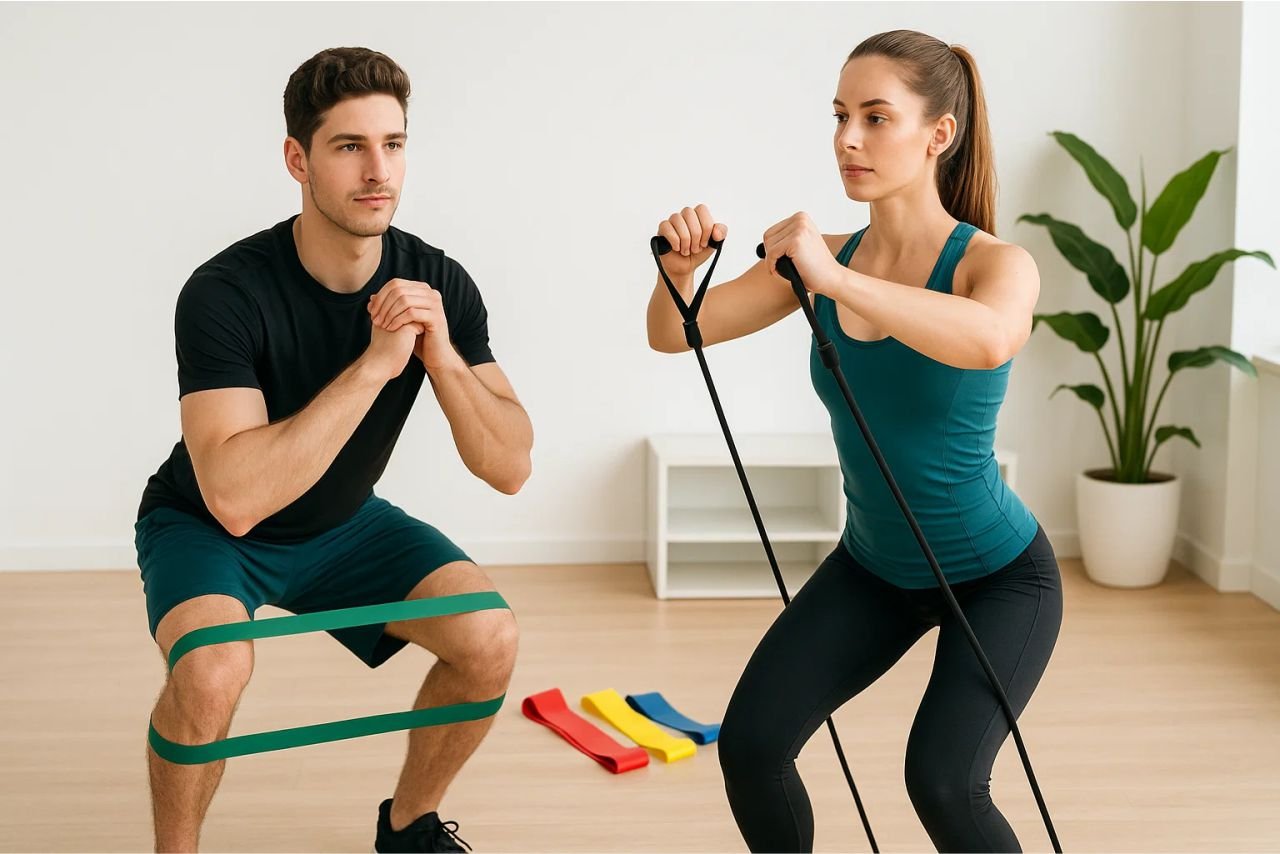
Think you need a fully equipped gym to build strength and stay flexible? Think again. A simple resistance band can do wonders for your fitness routine. These bands are stretchy, light, and easy to carry. You can use them at home, in the office, or even while traveling. They help you stay active without heavy machines or expensive gym memberships.
So, what are resistance bands? They are elastic bands designed for strength training and stretching. They come in different shapes and levels of resistance. This means you can pick one that fits your workout needs. In 2025, resistance band exercises are becoming more popular than ever. Why? They save space, are budget-friendly, and help people of all fitness levels improve their health. From busy professionals to athletes, everyone can benefit from them.
In this guide, we will share the top 7 resistance band exercises for strength and flexibility. These moves are simple yet powerful. They target your arms, legs, core, and back. They also help you stretch better and recover faster. Whether you are a beginner or already active, these exercises will fit right into your routine.
Our goal is to make your workouts easy and fun. You do not need special training to start. Just grab a band and follow the steps we share. By the end of this post, you will have a quick, effective, and flexible workout plan you can do anywhere. Ready to get stronger and move better? Let’s start with the first exercise!
Why Resistance Bands Are a Game-Changer for Strength and Flexibility
What makes this simple piece of rubber more effective than you think? It’s all about controlled resistance and a full range of motion. Resistance bands may look small, but they can give your body a full workout. These bands are light, easy to carry, and take up very little space. You can keep them in a drawer, your gym bag, or even a travel suitcase. That makes them perfect for home, office, or outdoor workouts.
The real magic of resistance band exercises comes from progressive resistance. As you stretch the band, it pulls back harder. This helps your muscles work more with every move. Unlike heavy dumbbells or gym machines, bands give you resistance in both directions—when you stretch and when you return. This means your muscles stay active the whole time.
Resistance bands also help you in two ways: they build strength and increase flexibility. You can use them for squats, rows, presses, or gentle stretches. They make your muscles stronger while keeping your joints safe and mobile.
Compared to traditional weights, bands are safer for beginners. They are less likely to cause injury because they let you control the tension. Plus, you don’t need a lot of space or expensive equipment.
If you want a simple way to get strong and stay flexible, start with resistance bands. They are small, powerful, and ready to fit into your daily routine.
Read Also: How Resistance Bands Are Revolutionizing Functional Fitness in 2025
How to Choose the Right Resistance Band for Your Workout
Not all bands are created equal—using the wrong one can slow your progress or even cause injury. Choosing the right band is the first step to making your resistance band exercises safe and effective.
There are many types of bands. Loop bands are great for legs and glutes. Tube bands often come with handles and are good for upper-body moves. Therapy bands are flat and soft, perfect for rehab and gentle stretches. Figure-8 bands are small and handy for quick, targeted exercises.
Next, think about the resistance level. Bands come in light, medium, and heavy levels. Light bands are good for beginners and stretching. Medium bands give more challenge and work well for general fitness. Heavy bands are for building serious strength. Start light if you are new, then move up as your muscles grow stronger.
Before you begin, follow a few safety tips. Always warm up your muscles to avoid strains. Check your band for cracks or weak spots before using it. Avoid sudden snaps by holding the band firmly and moving in slow, controlled motions.
If you are just starting, buy a set with different levels. This way, you can use light bands for flexibility and heavy ones for strength. Pros often keep a mix to match their daily routine.
Picking the right band will make your workouts smoother, safer, and more fun. The right tool means better results with less risk!
7 Best Resistance Band Exercises for Strength and Flexibility
Here’s your one-band workout blueprint—covering every major muscle group while improving your flexibility. With just a simple band, you can build strength, boost mobility, and move with ease. These resistance band exercises are easy to follow and need little space, making them perfect for your home, gym, or even while traveling.
In this section, you will find the 7 best moves that target your arms, legs, back, and core. Each one is designed to help you gain power and stay flexible at the same time. Start slow, focus on your form, and feel the difference as your muscles get stronger and looser with every stretch and pull.
1. Resistance Band Squats
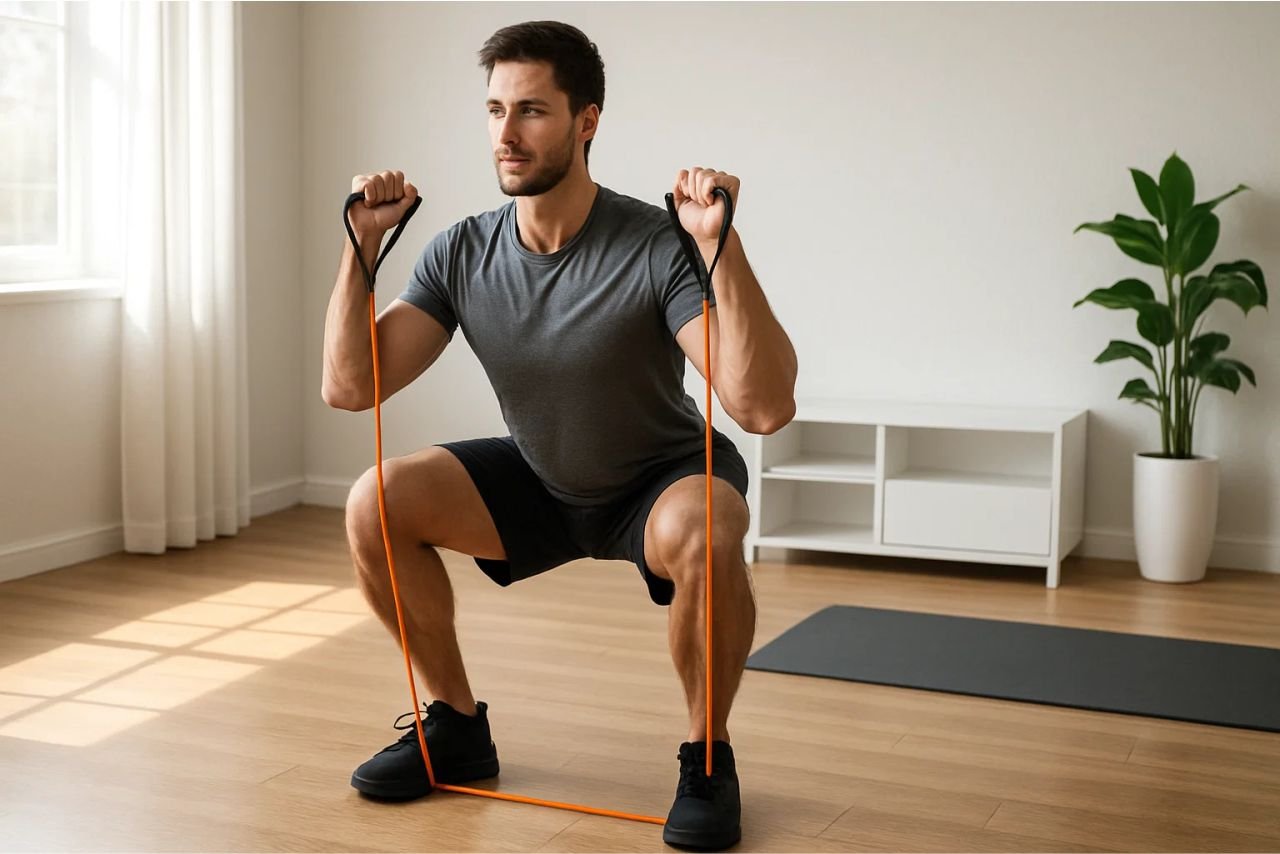
Resistance Band Squats are one of the best resistance band exercises to build strong legs and hips. This move works your quads, hamstrings, and glutes while also keeping your core tight and steady. It is simple, safe, and perfect for both beginners and pros.
Start by standing with your feet shoulder-width apart. Place the band under your feet and hold the ends at your shoulders. Make sure the band feels snug but not too tight. Keep your chest up and your back straight.
Now, bend your knees and push your hips back as if you are sitting on a chair. Go down slowly until your thighs are almost parallel to the floor. Keep your weight on your heels and your core engaged. Then, press through your heels and stand back up.
Do 10–12 reps in a controlled way. Do not rush. Focus on your breathing—inhale as you squat down, exhale as you stand up.
This exercise builds leg strength, improves balance, and supports better posture. Add it to your routine 3–4 times a week for best results. Over time, your legs will grow stronger, and your movements will feel smoother and more powerful.
2. Band-Assisted Pull-Aparts
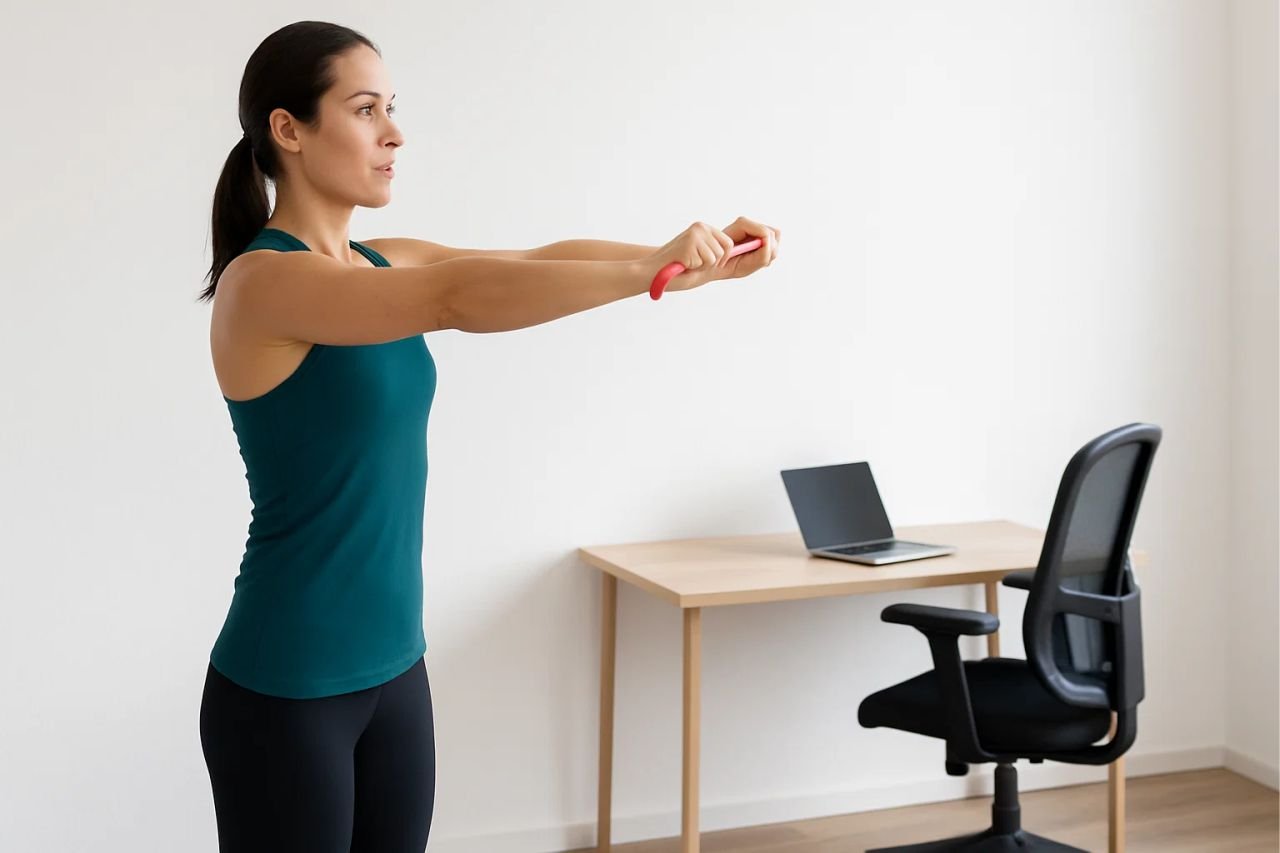
Band-Assisted Pull-Aparts are a simple yet powerful resistance band exercise that strengthens your shoulders and improves posture. This move works the muscles in your upper back and helps you stand tall. It is especially great for office workers with rounded shoulders from sitting too long.
To start, hold a resistance band with both hands at shoulder height. Keep your arms straight but relaxed. Your hands should be slightly wider than your shoulders. Stand tall, keep your chest up, and engage your core.
Now, pull the band apart slowly by moving your hands out to the sides. Focus on squeezing your shoulder blades together as the band stretches. Hold for a second, then return to the starting point with control. Do not let the band snap back.
Repeat this move 10–15 times in a smooth, steady rhythm. Inhale as you pull, exhale as you return.
This exercise is great for undoing bad posture habits and reducing neck and shoulder stiffness. Add it to your daily routine, especially if you spend hours at a desk. Over time, your back will feel stronger, your shoulders will open up, and your posture will improve naturally.
3. Resistance Band Deadlifts
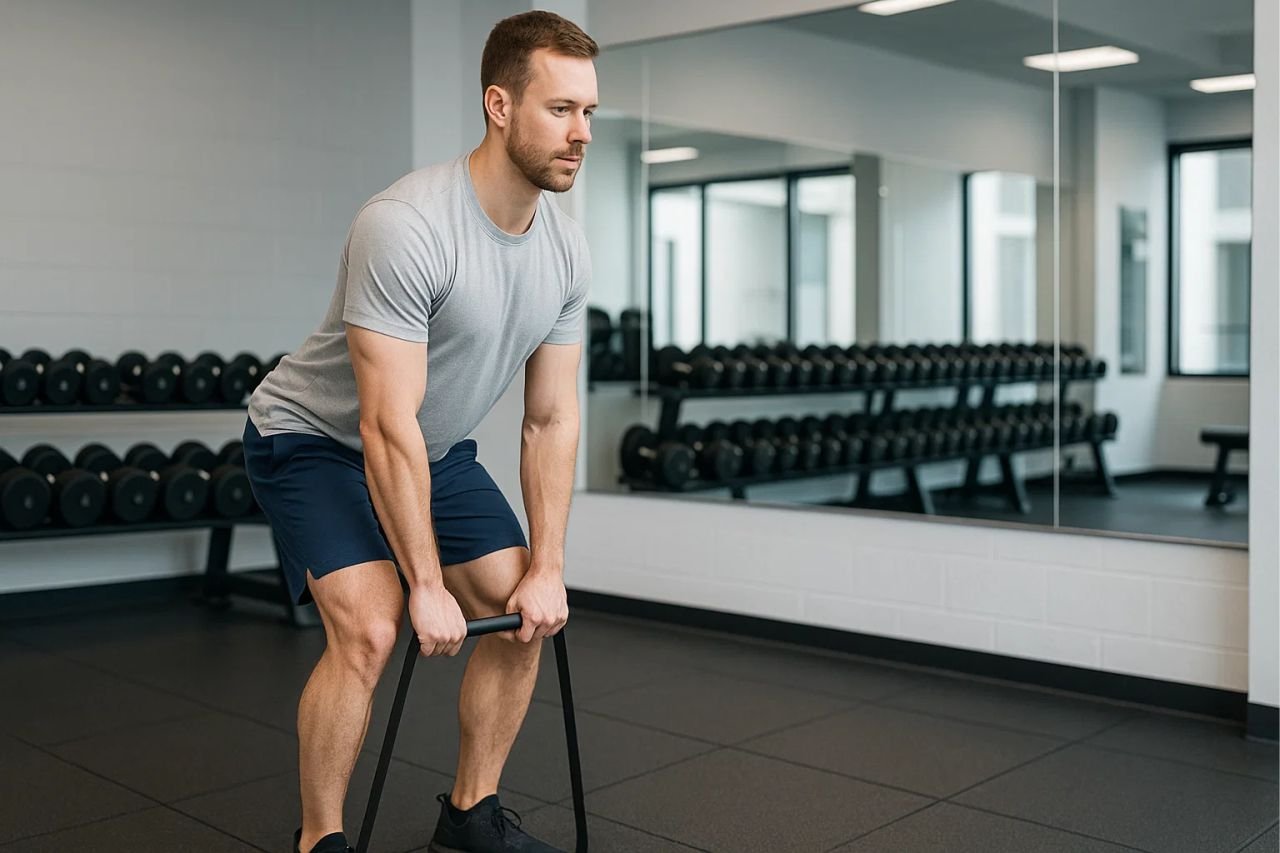
Resistance Band Deadlifts are one of the best resistance band exercises to build strong legs and a stable back. This move works your hamstrings, glutes, and lower back together. It is also much safer for beginners than lifting heavy weights because the band gives you more control.
To begin, place a resistance band flat on the floor. Step on it with both feet, keeping them shoulder-width apart. Hold the band handles or ends with your hands in front of your thighs. Keep your back straight, chest up, and knees slightly bent.
Now, hinge at your hips and lower your hands down toward your knees. Feel the stretch in your hamstrings. Then, push your hips forward and stand tall while pulling the band up. Squeeze your glutes at the top before lowering slowly again.
Repeat this move 10–12 times with steady control. Do not rush or use jerky motions. Keep your core tight to protect your back.
This exercise helps you lift better, move easier, and protect your spine from strain. Add it to your routine 3–4 times a week to build strength, improve balance, and develop a strong lower body without heavy gym equipment.
4. Standing Chest Press with Band
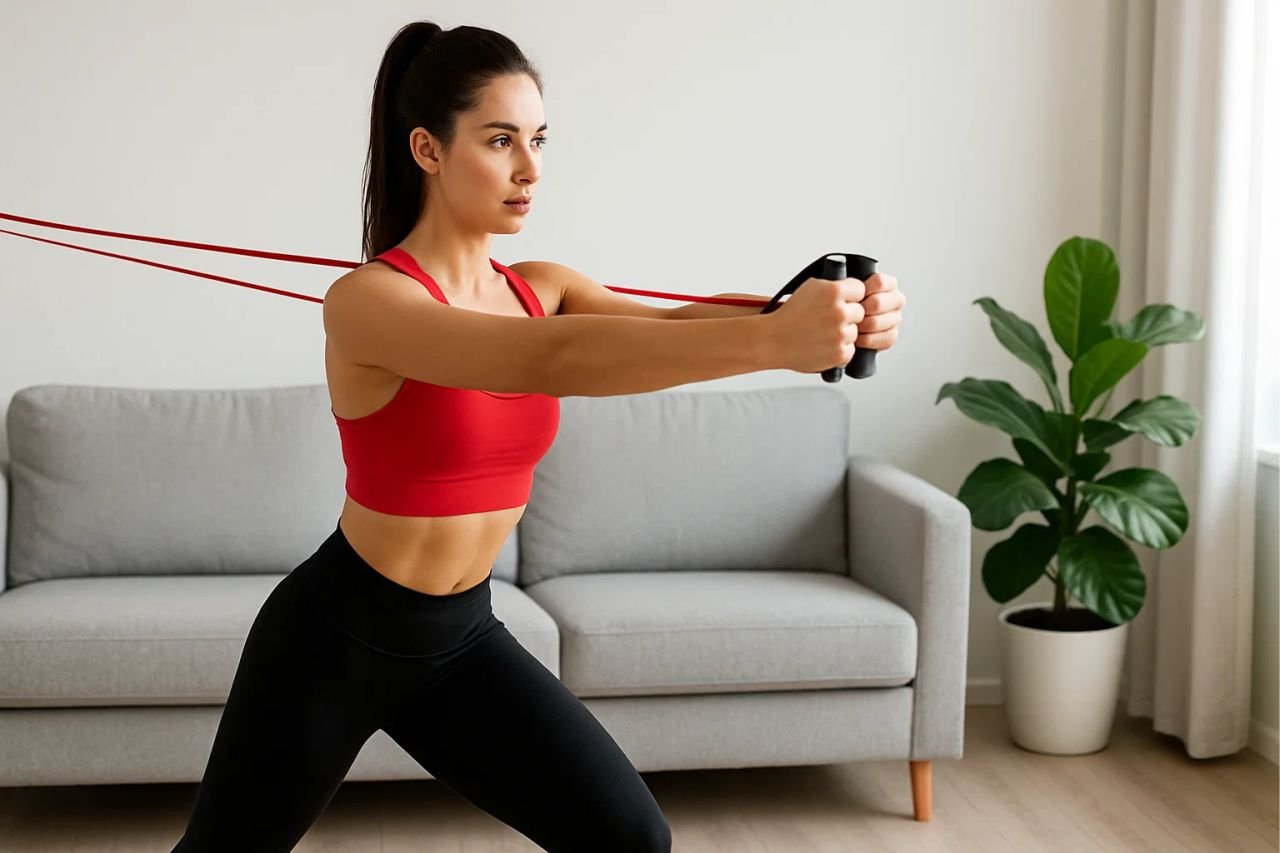
The Standing Chest Press with Band is one of the most effective resistance band exercises for building a strong chest without a bench. It mimics a traditional bench press but needs no heavy equipment. This move works your chest, shoulders, and triceps all at once, making it perfect for home workouts.
To start, anchor the band behind you at chest height—around a door, pole, or sturdy object. Hold each end of the band in your hands and stand with one foot slightly forward for balance. Keep your elbows bent and hands at chest level.
Now, push your hands forward until your arms are straight. Feel your chest muscles tighten. Slowly bring your hands back to the starting point. Keep your core tight and your movements smooth.
Repeat this press 10–12 times to build strength or hold for a few seconds for better muscle activation. Avoid locking your elbows and do not rush.
This exercise helps improve your upper body strength, posture, and pushing power. Add it to your routine 3–4 times a week to tone your chest and arms while keeping your shoulders safe and stable—no heavy weights needed.
5. Resistance Band Rows
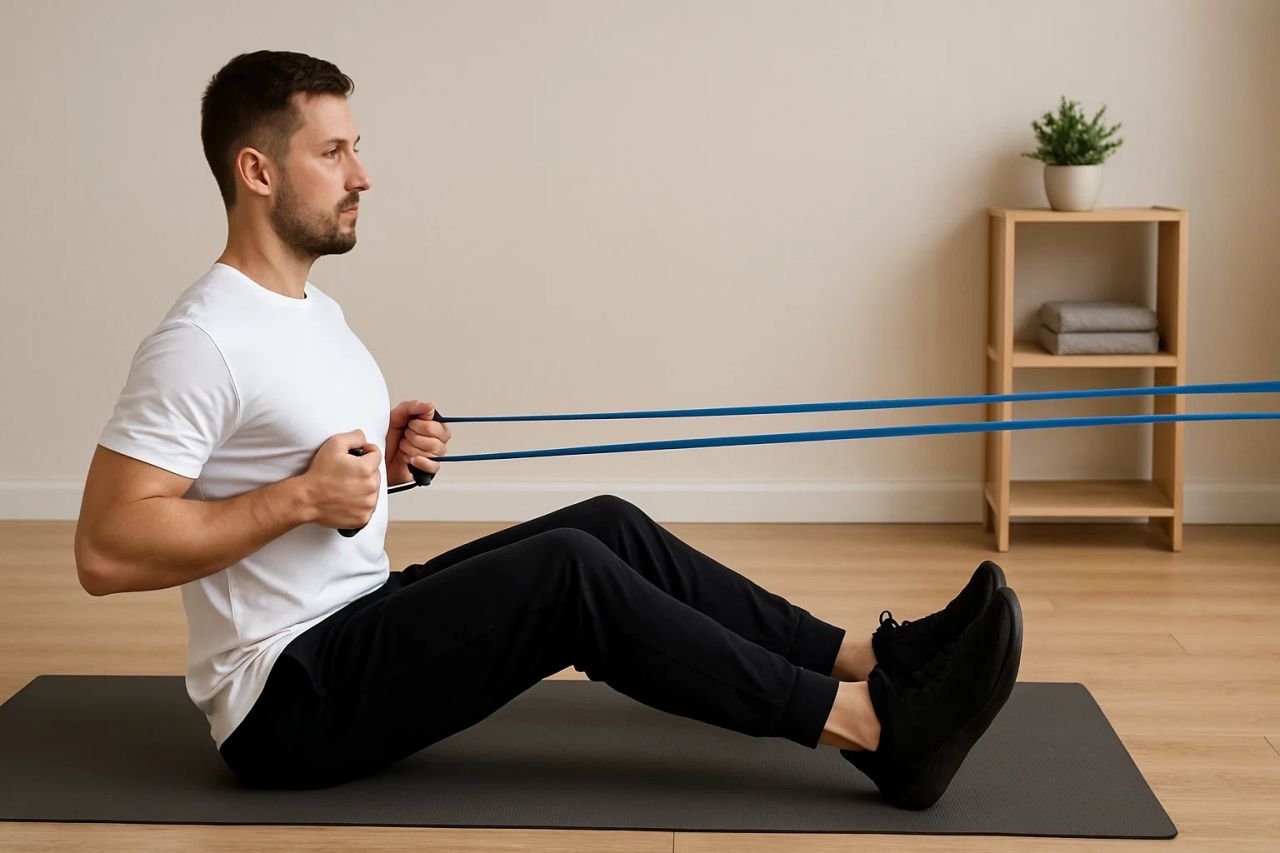
The Resistance Band Rows are a must-try in your list of resistance band exercises. This move helps you build a stronger back and improves your posture by aligning your spine. It works your upper back, shoulders, and arms, making it a simple but powerful choice for beginners and pros.
You can do this exercise seated or standing. To start, anchor the band to a stable object at your waist level. Sit or stand with your feet shoulder-width apart. Hold the band handles with both hands and keep your back straight.
Now, pull the band towards your stomach while squeezing your shoulder blades together. Keep your elbows close to your body. Slowly return to the start without letting the band snap back.
Do 10–15 controlled pulls for strength. Hold for a few seconds at the end of each pull for better results. Avoid leaning back or using jerky movements—stay steady and strong.
This exercise not only builds a wider, stronger back but also helps reduce slouching from sitting too long. Add it to your routine 3–4 times a week to improve your upper body strength and posture naturally.
6. Seated Hamstring Stretch with Band
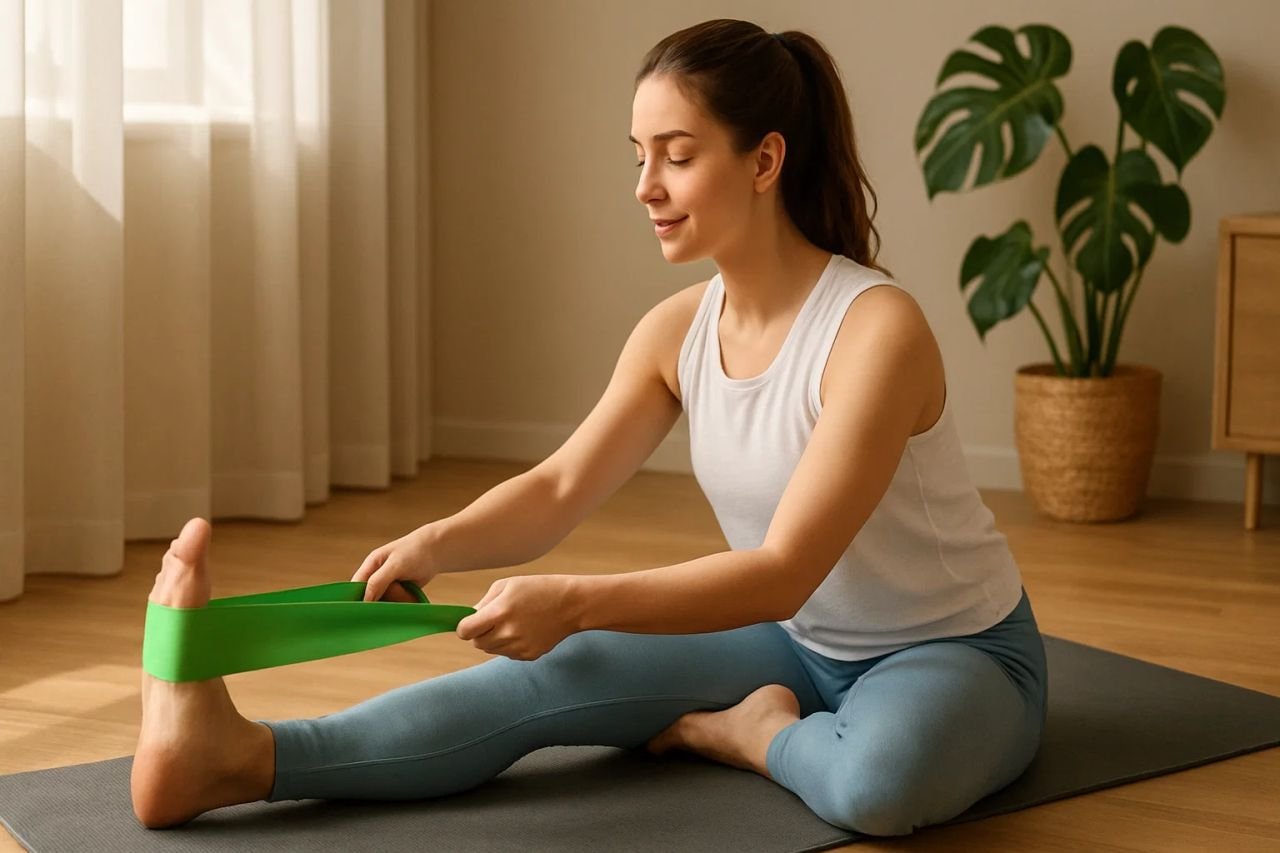
The Seated Hamstring Stretch with Band is one of the simplest resistance band exercises to improve your lower body flexibility. This move targets your hamstrings, calves, and even your lower back. It is perfect for a recovery day or as a cool-down after a tough workout.
To start, sit on the floor with your legs stretched out straight. Loop the band around the sole of one foot while holding both ends firmly in your hands. Keep your back straight and your core tight.
Now, gently pull the band towards you as you lean forward slightly. Feel a stretch in the back of your leg. Hold this position for 15–30 seconds. Breathe deeply and relax your shoulders. Slowly release and switch to the other leg.
This exercise is ideal for post-workout recovery because it reduces muscle tightness and improves blood flow. It also helps prevent injuries by keeping your muscles flexible over time.
Do this stretch 3–4 times a week, especially after leg workouts or long sitting hours. Keep your movements smooth and controlled to get the best results without any strain.
7. Overhead Shoulder Stretch
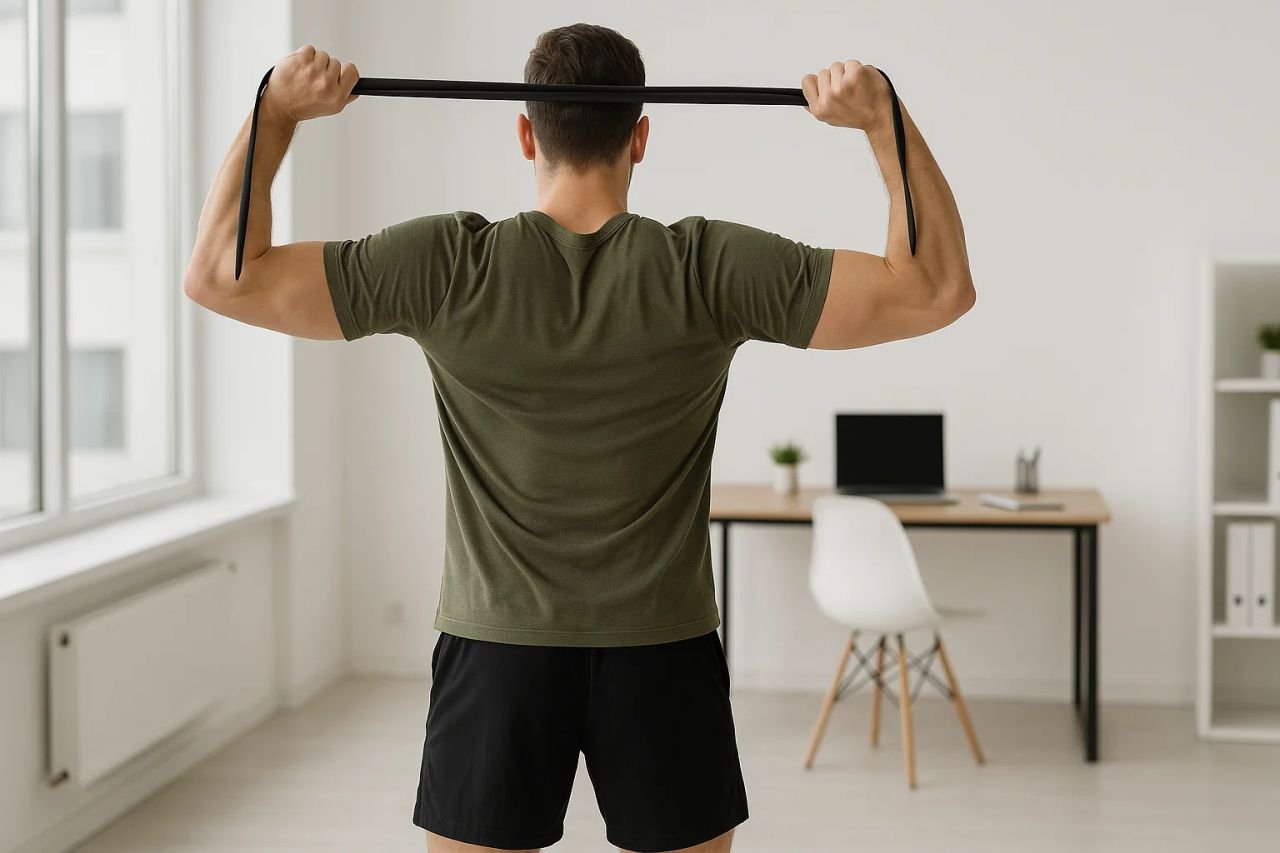
The Overhead Shoulder Stretch is a simple yet powerful move from the list of resistance band exercises. It helps open up your shoulders and upper back, making it perfect for anyone who spends long hours sitting at a desk. This stretch reduces stiffness and improves posture over time.
To begin, stand tall with your feet shoulder-width apart. Hold the band with both hands and lift it over your head. Keep your arms straight but not locked. Slowly pull the band apart while lowering it slightly behind your head. Feel a gentle stretch across your shoulders and chest.
Hold this position for 15–30 seconds while taking slow breaths. Avoid jerking or pulling too hard, as this can strain your muscles. Bring the band back up to the starting position and repeat 2–3 times.
This exercise is excellent for relieving tension caused by sitting or hunching forward. It also helps prepare your upper body for other workouts, making your movements smoother and safer.
Include this stretch in your warm-up or cool-down routine. Do it regularly to keep your shoulders flexible and pain-free.
Pro Tips for Maximizing Your Resistance Band Workouts
A band is only as effective as your technique—here’s how to get the most out of every stretch and rep. When it comes to resistance band exercises, the way you move matters more than how fast you finish. Good form keeps your muscles active and your joints safe.
First, always use controlled movements. Do not let the band snap back quickly. Move slowly and feel the stretch in both directions. This keeps your muscles working through the whole range of motion.
Next, increase tension gradually. Start with a light pull and add more stretch as you get stronger. Do not rush to use heavy bands too soon. Your muscles need time to adapt.
For strength, aim for 8–12 reps per set. This range helps you build power without overloading your body. For flexibility, hold each stretch for 15–30 seconds. Take deep breaths and let your muscles relax into the stretch.
Also, keep your core tight and your posture straight. This prevents injuries and helps you use the band more effectively. Short, quick jerks can hurt your joints, so stay steady and smooth.
These simple tips make a big difference in your workout. They help you train smarter, not harder. Whether you are new to bands or already a fan, following these steps will boost your results and keep your routine safe.
Master the basics, and your resistance band exercises will do more than build strength—they will also make your body flexible, strong, and ready for anything.
Common Mistakes to Avoid with Resistance Band Exercises
Are you unknowingly sabotaging your progress? These are the most common resistance band blunders. Many people start doing resistance band exercises with good intentions, but a few simple mistakes can slow their results or even cause injuries.
First, using bands that are too light or too heavy is a big problem. A very light band will not challenge your muscles enough, while an overly heavy band can strain your joints. Choose a band that lets you feel tension without losing control.
Second, never skip your warm-up. Cold muscles are stiff and more likely to get hurt. Spend a few minutes moving your arms, legs, and shoulders before you start. Simple stretches or light movements with the band are enough to wake up your body.
Third, avoid jerky, uncontrolled movements. Pulling the band too fast or letting it snap back can cause pain and make your workout less effective. Move slowly and keep your muscles engaged both when you pull and when you return.
These mistakes are easy to fix. Pick the right resistance level, warm up properly, and move with control. Your exercises will feel better, and your results will come faster.
When you avoid these errors, your resistance band exercises become safer and more rewarding. You will build strength, improve flexibility, and enjoy every session without the worry of injuries.
Sample Full-Body Resistance Band Routine (Beginner-Friendly)
No need to overcomplicate things—start with this quick 20-minute routine that hits every major muscle group. This simple plan uses the top 7 resistance band exercises for strength and flexibility and is perfect for beginners.
Start with a light warm-up to loosen your joints. Then, follow this step-by-step flow:
- Resistance Band Squats – 12 reps.
- Band-Assisted Pull-Aparts – 12 reps.
- Resistance Band Deadlifts – 10 reps.
- Standing Chest Press – 12 reps.
- Resistance Band Rows – 12 reps.
- Seated Hamstring Stretch – hold for 20 seconds each side.
- Overhead Shoulder Stretch – hold for 20 seconds.
Take 30–60 seconds of rest between each exercise. Keep your movements slow and controlled. Focus on your breathing and form.
Repeat this circuit two times if you are just starting. As you feel stronger, move up to three rounds. Do this workout 3–4 times a week to build a steady habit.
This routine is quick, effective, and easy to follow. You do not need a lot of space or expensive equipment—just one band and a little motivation.
With regular practice, your resistance band exercises will help you gain strength, improve flexibility, and boost your energy. Start today, stay consistent, and enjoy the results that come with steady progress.
Final Thoughts: Why Resistance Bands Deserve a Place in Your Fitness Journey
One band, countless benefits—start small today and watch your strength and flexibility grow. Resistance bands are more than just simple tools. They help you build strong muscles, improve your posture, and stretch your body safely. With the right resistance band exercises, you can make big changes without heavy weights or fancy machines.
The key is not to rush. Focus on consistency, not intensity. Start with one or two exercises from this list. Practice them a few times a week. As your body gets stronger, add more moves. Over time, you will feel more flexible, balanced, and full of energy.
The best part? Resistance bands are easy to carry and fit into any routine. You can use them in your living room, office, or even while traveling. They work for beginners, busy parents, athletes, and everyone who wants a quick and effective workout.
So, why wait? Pick up a band and start your journey today. Your stronger, healthier self is just a stretch away.
If you enjoyed these top 7 resistance band exercises, subscribe to our blog for more simple fitness tips and step-by-step guides. We share new ideas every week to help you stay active and motivated. And if you are looking for high-quality fitness gear and resistance bands, explore our collection designed for comfort and long-lasting performance.
Your path to better strength and flexibility starts with one small step—and that step is yours to take right now!