
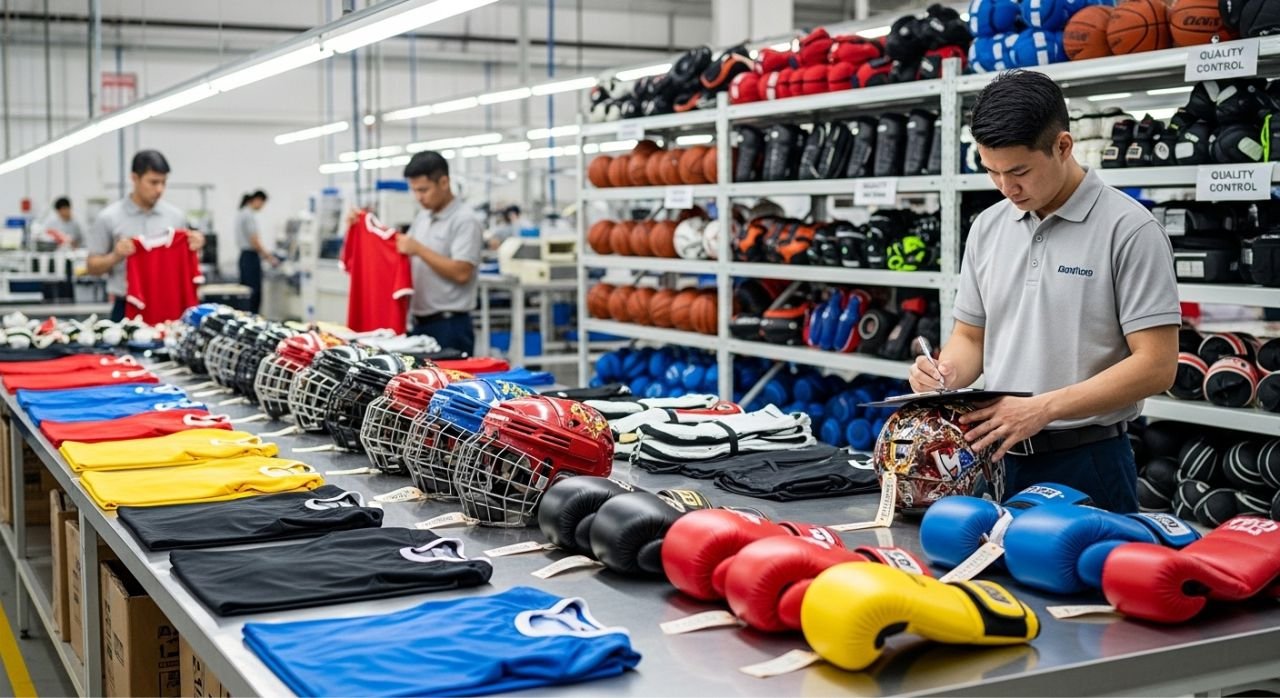
Poor quality can destroy a brand faster than bad marketing. That’s why sports gear manufacturing quality standards matter so much—especially for B2B buyers like brands, importers, and distributors. When you order in bulk, you don’t just buy products—you trust a manufacturer with your reputation. However, many buyers face real problems. For example, they receive items with inconsistent quality, or shipments arrive late. Sometimes, products even fail inspections. As a result, businesses lose money, time, and customer trust.
So, what should you do? First, you need to understand how sports gear quality control works. Next, you should know what makes a high-quality sports gear supplier reliable. In addition, learning about sports equipment manufacturing standards helps you make smarter decisions. This is important because not all manufacturers follow the same process or care about quality assurance.
In this guide, we will make things simple and clear. You will learn what to expect, what to check, and what to demand from your manufacturer. We will also explain key steps, such as quality inspection in sportswear production, and how to avoid common mistakes. By the end, you will feel confident and ready to choose the right partner for your business.
Because in the end, strong quality standards don’t just protect your products—they protect your brand.
Why Sports Gear Manufacturing Quality Standards Matter for B2B Buyers
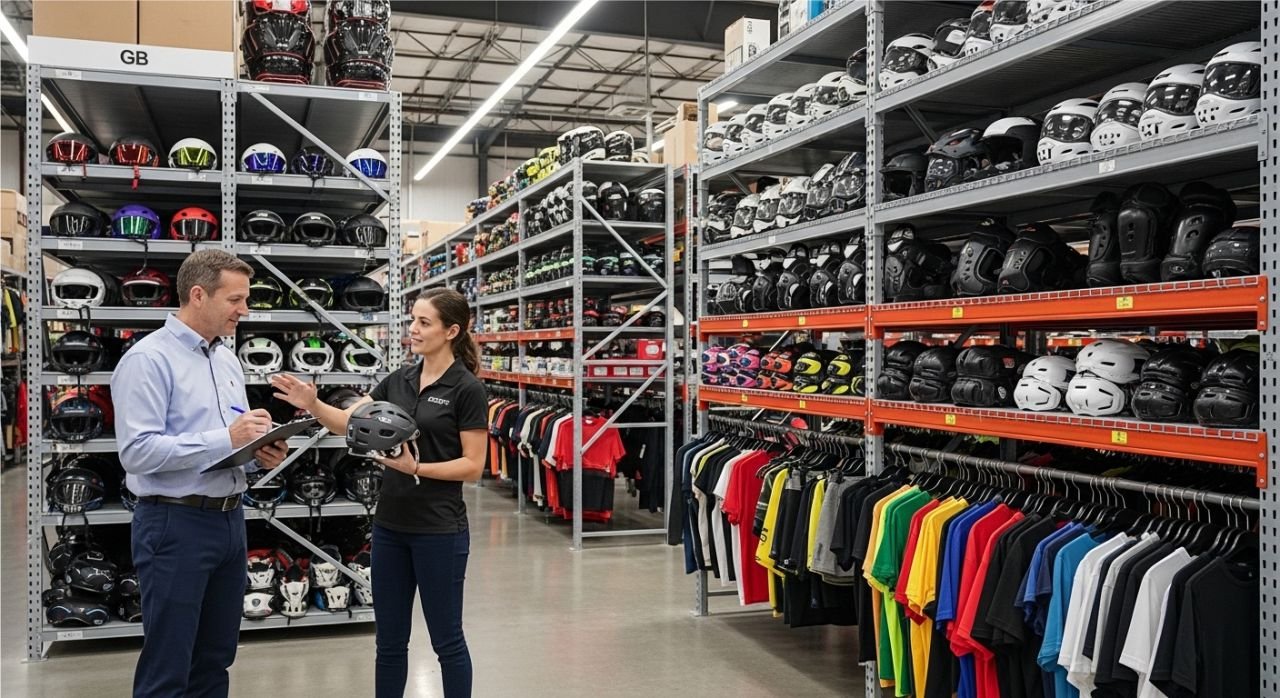
Sports gear manufacturing quality standards are very important for every B2B buyer. Why? Because your brand depends on product quality. If your sports gear looks good and works well, customers trust you. But if the quality is poor, they lose trust fast. And once trust is gone, it is hard to win it back.
First, let’s talk about brand reputation. When you follow strong sports gear quality control, your products stay consistent. This means every item meets the same level of quality. As a result, customers feel happy and confident. They come back again. So, good quality builds strong customer trust.
However, poor quality can cause big problems. For example, you may face returns and refunds. You may also lose important clients. In addition, fixing mistakes costs time and money. This is why quality assurance in sportswear manufacturing is not just helpful—it is necessary.
On the other hand, working with a high-quality sports gear supplier brings long-term benefits. You get reliable products, smooth production, and fewer issues. Plus, your brand grows faster because customers trust your products. Over time, this leads to better sales and stronger business relationships.
So, always choose a manufacturer that follows proper sports equipment manufacturing standards. It helps you avoid risks and build a brand that lasts.
Because in business, quality is not an expense—it is an investment in success.
Key Sports Gear Manufacturing Quality Standards You Should Expect
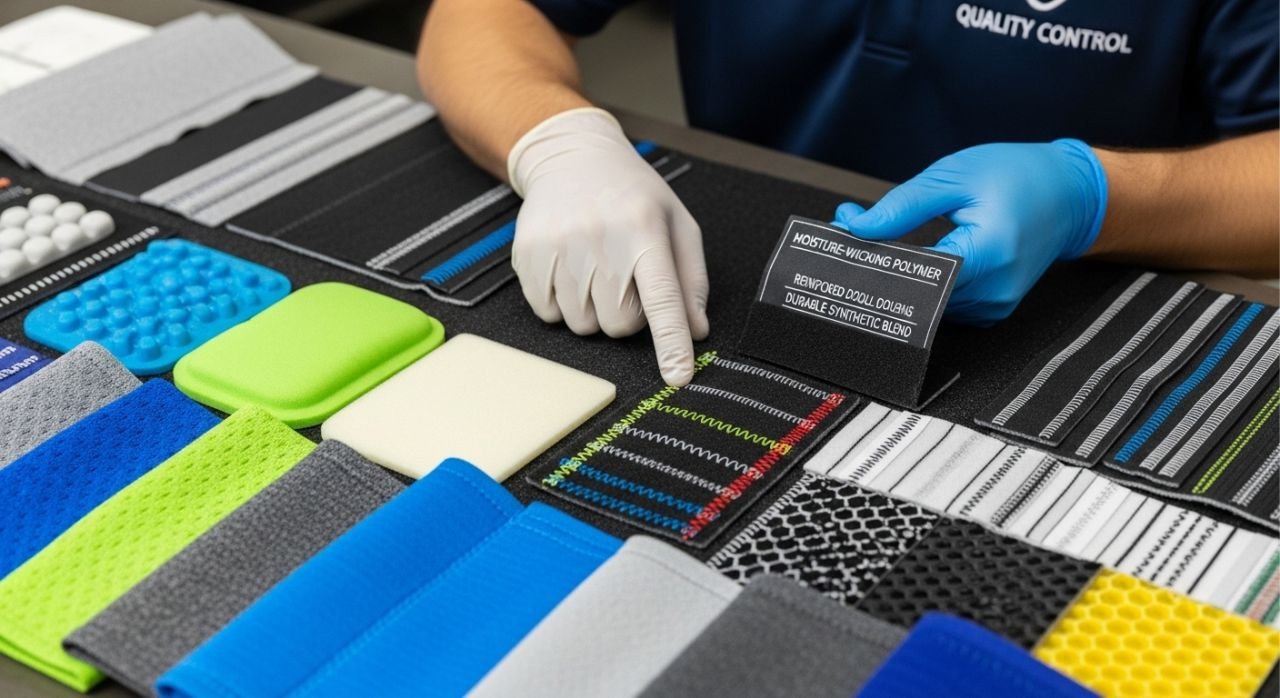
When you choose a supplier, you must understand sports gear manufacturing quality standards. These standards help you get products that look good, feel strong, and last long. So, let’s break it down in a simple way.
- First, check the material quality and sourcing standards. Good sports gear starts with good materials. A trusted supplier uses strong, safe, and tested fabrics. This is part of sports equipment manufacturing standards. As a result, your products perform better and last longer.
- Next, look at durability and performance benchmarks. Sports gear must handle tough use. It should not tear, fade, or lose shape quickly. That is why sports gear quality control is important. It makes sure every item meets the right performance level.
- Then, focus on stitching, finishing, and construction quality. Clean stitching and neat finishing show care and skill. If seams are weak, the product can break. So, proper quality inspection in sportswear production checks every detail before delivery.
- Also, don’t forget safety and compliance requirements. Your products must follow rules and standards. This protects users and builds trust. Good manufacturers follow strict quality assurance in sportswear manufacturing to meet global safety needs.
In short, these standards are not just rules—they are your protection. When you follow them, you reduce risk and increase value.
Because in the end, high-quality standards create high-quality brands.
Quality Control Process in Sports Gear Manufacturing Explained
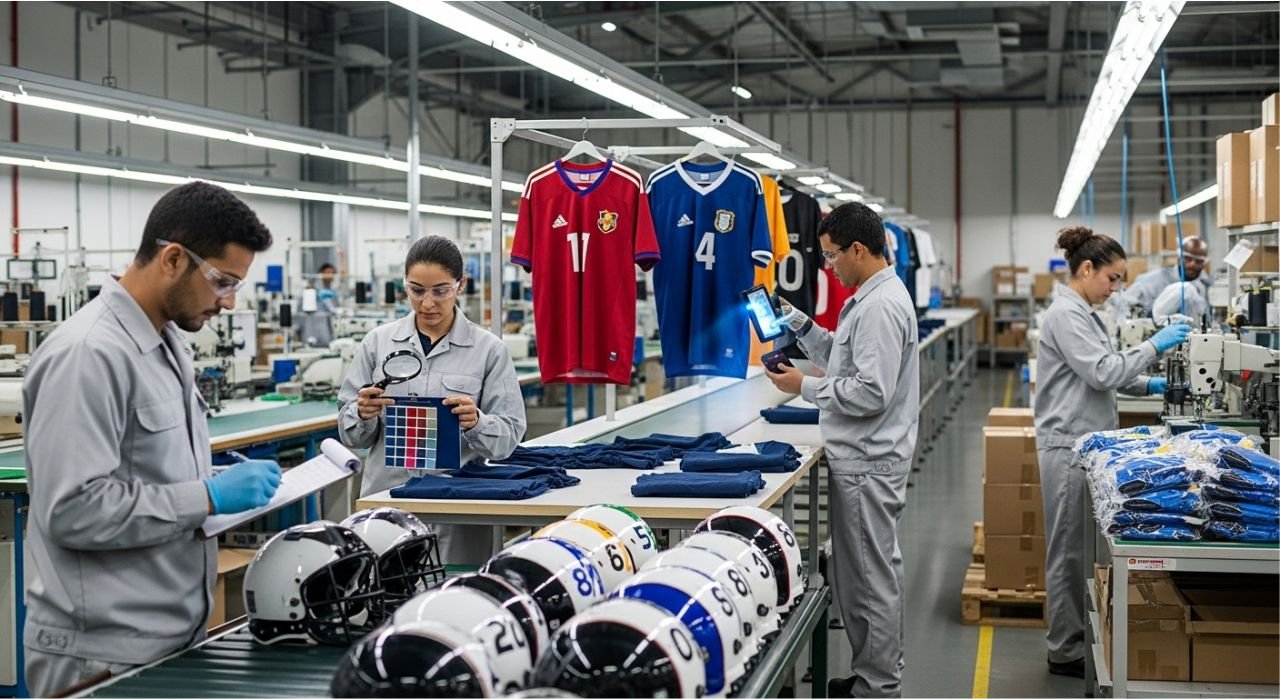
To meet strong sports gear manufacturing quality standards, every product must pass a clear and careful process. This process is called sports gear quality control. It helps make sure your products are safe, strong, and ready to use. Let’s understand it step by step.
- First comes pre-production material inspection. Before making anything, the manufacturer checks all materials. They test fabric, padding, and other parts. This step ensures only high-quality materials are used. As a result, the final product becomes more durable.
- Next, we have in-line production quality checks. During production, workers check items again and again. They look at stitching, shape, and design. If they find a problem, they fix it quickly. So, this step keeps the process smooth and reduces mistakes. It is a key part of quality inspection in sportswear production.
- Then comes the final inspection before shipment. Here, finished products are checked one last time. Experts review size, finishing, and overall quality. This step makes sure everything meets the required sports equipment manufacturing standards before delivery.
- Also, B2B buyers can choose third-party inspection options. This means an outside company checks the products. It adds extra trust and confidence. Many buyers prefer this for large orders.
In short, a strong quality control system protects your business. It reduces risk and improves product value.
Because in the end, good quality control means happy customers and a stronger brand.
International Quality Standards for Sports Equipment Manufacturing
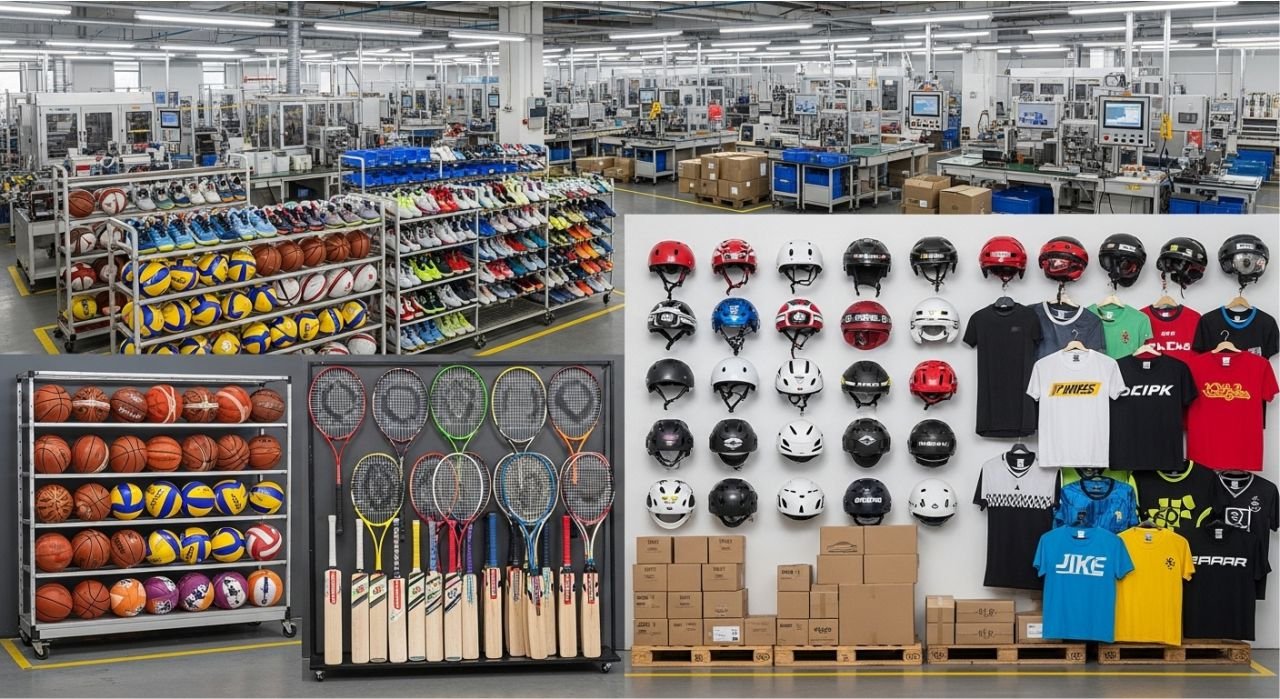
When it comes to sports gear manufacturing quality standards, following international quality standards is essential. B2B buyers need to know that products meet global rules for safety, durability, and performance. This ensures your brand stays trusted no matter where you sell.
One key standard is ISO certification. ISO stands for the International Organization for Standardization. These certifications show that a manufacturer follows strict guidelines in production, materials, and quality checks. By working with an ISO-certified supplier, you can be confident that your products are consistent and reliable.
Next, compliance with international safety standards is critical. Sports gear must protect users during intense activity. From helmets to padding, every item must meet rules for strength, impact resistance, and safety. When manufacturers follow these standards, buyers can reduce risks, avoid recalls, and protect their brand reputation.
For global B2B buyers, these standards are even more important. If you are importing or exporting sports gear, regulators often require proof of compliance. Working with manufacturers who follow ISO standards in sports manufacturing simplifies customs and ensures smooth shipments. It also makes your brand look professional and trustworthy in international markets.
In short, international quality standards are not just paperwork—they are a guarantee. They ensure your products are safe, durable, and respected worldwide. By choosing a manufacturer who follows these standards, you protect your investment and deliver the best value to your customers.
Because at the end of the day, strong standards = safe products + global trust + satisfied clients.
Materials & Technology: The Foundation of High-Quality Sports Gear
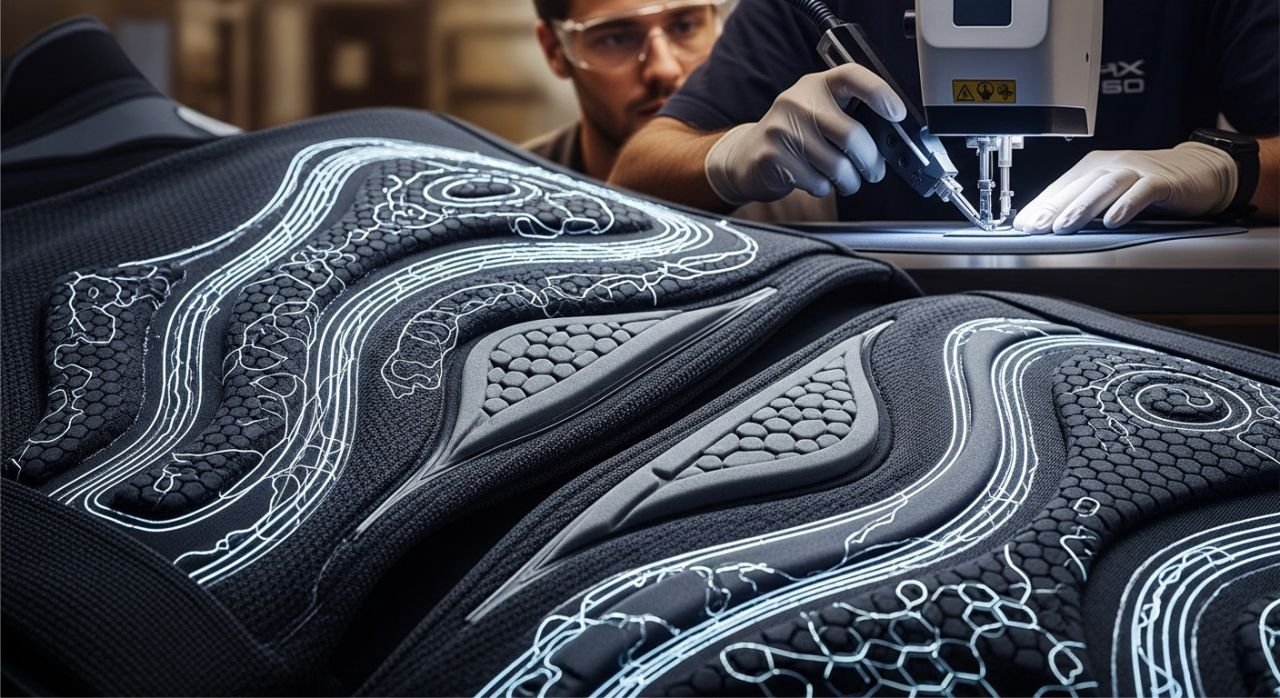
At the heart of sports gear manufacturing quality standards are materials and technology. Without the right fabrics and smart manufacturing techniques, even the best designs can fail. For B2B buyers, understanding this foundation helps ensure that every product meets expectations.
First, performance fabrics and materials are key. High-quality sports gear needs strong, durable, and breathable fabrics. These materials help athletes move freely, stay comfortable, and perform their best. Choosing a high-quality sports gear supplier ensures that your products use only the best materials, tested for durability and safety.
Next, advanced manufacturing techniques make a big difference. From precision stitching to heat-sealed seams, modern methods improve product strength and consistency. They reduce mistakes and enhance overall quality. This is why quality inspection in sportswear production is easier when advanced techniques are used—they catch errors before products leave the factory.
Finally, innovation plays a huge role in durability and comfort. Smart designs, ergonomic cuts, and stretch fabrics can make sports gear last longer and feel better. B2B buyers benefit from suppliers who embrace technology and innovation because it guarantees that products are both functional and attractive.
In short, the right materials and manufacturing technology form the backbone of strong, reliable sports gear. By partnering with suppliers who focus on these elements, buyers can ensure their products meet sports gear quality standards, delight customers, and maintain brand reputation.
Because in the end, great sports gear starts with great materials and smart technology.
How B2B Buyers Can Verify a Manufacturer’s Quality Standards
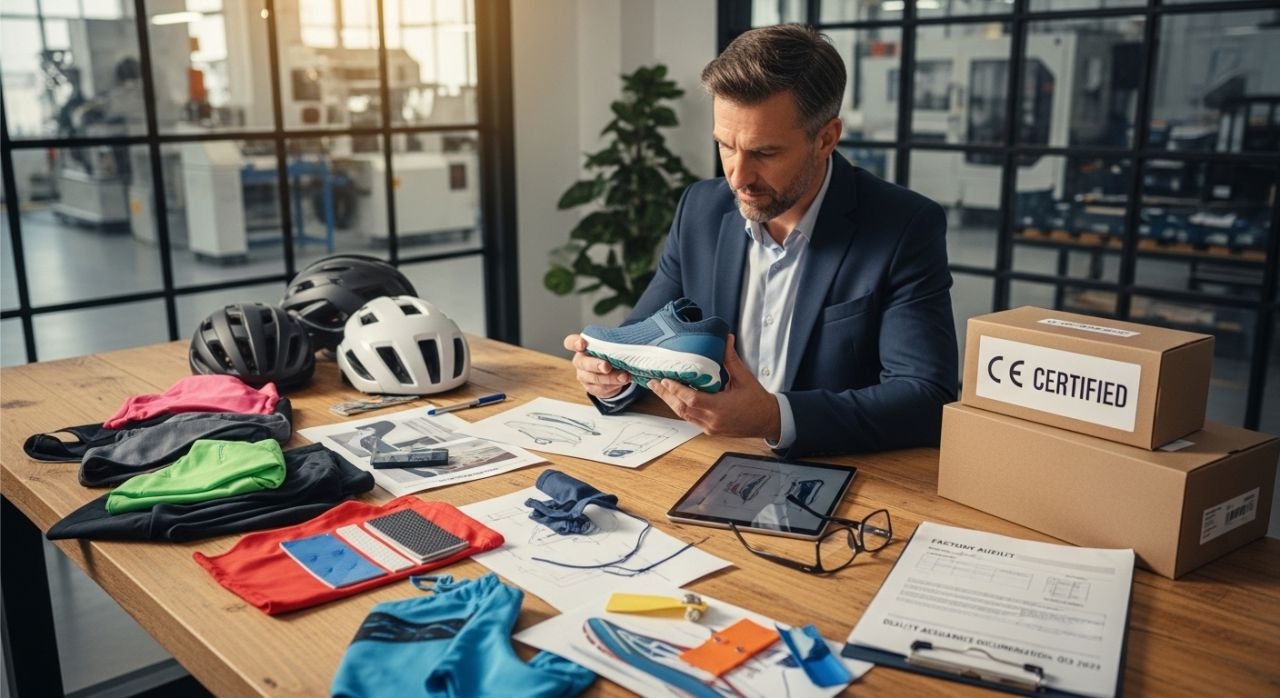
For B2B buyers, knowing that a manufacturer meets sports gear manufacturing quality standards is critical. Verifying quality before placing a bulk order protects your brand, saves money, and ensures customer satisfaction. Here’s how you can check carefully and confidently.
First, request samples and prototypes. Seeing and testing a product before ordering in bulk shows the real quality. Check materials, stitching, durability, and performance. This step helps you compare products and avoid surprises later.
Next, consider factory audits and certifications. A factory that follows ISO standards in sports manufacturing and holds valid certificates proves it meets international quality benchmarks. Visiting the factory or reviewing audit reports adds an extra layer of trust.
Also, review past client work and testimonials. Reliable suppliers can show previous projects and client feedback. This helps you understand their consistency, reliability, and attention to sports gear quality control.
Finally, always ask the right quality-related questions. Ask about materials, production processes, testing methods, and final inspections. Good manufacturers are transparent and happy to explain their procedures. This ensures you know exactly what you are buying.
By following these steps, B2B buyers can make informed decisions. You reduce risk, avoid delays, and get high-quality products that meet your brand’s expectations.
In short, verifying quality standards is not optional—it’s a smart business move. When you request samples, check certifications, review past work, and ask the right questions, you partner with manufacturers who deliver consistent, reliable, and durable sports gear.
Because in the end, informed buyers get better products, happy customers, and stronger brands.
Common Quality Issues in Sports Gear Manufacturing (And How to Avoid Them)
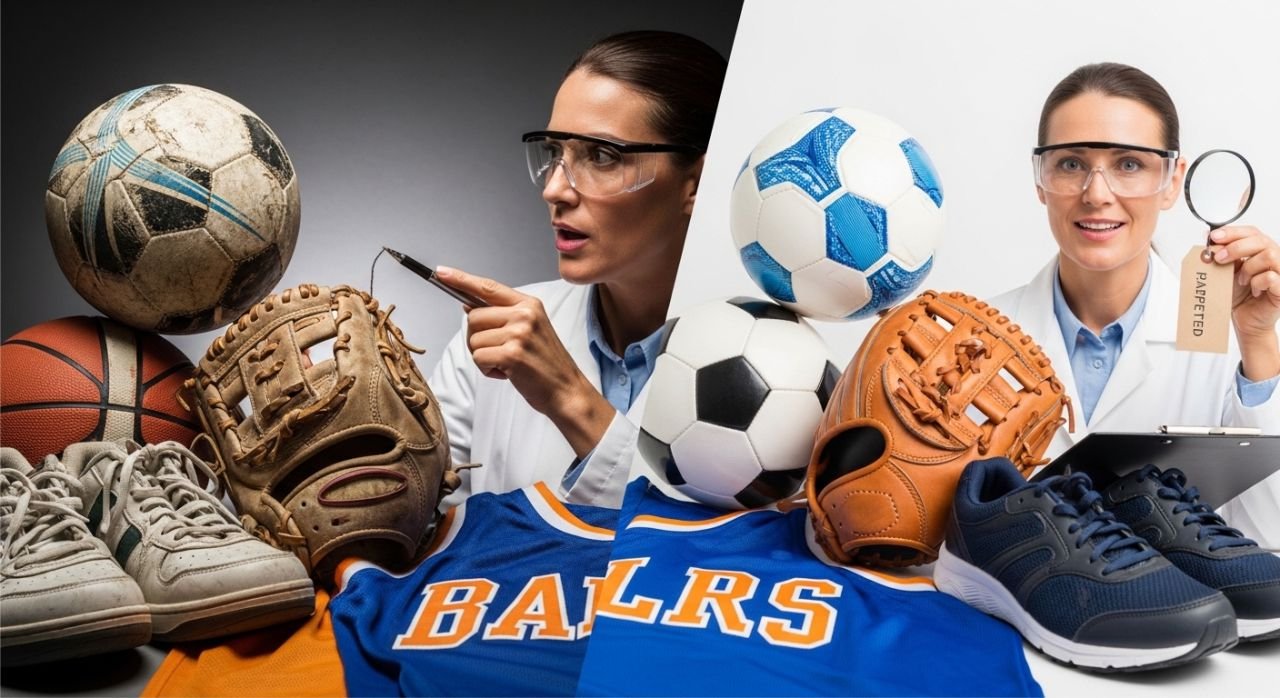
Even the best brands can face challenges if sports gear manufacturing quality standards are not followed. Understanding common quality issues in sports gear manufacturing helps B2B buyers avoid mistakes, save money, and protect their reputation.
One major problem is inconsistent sizing and fit. If the gear does not match the advertised sizes, customers get frustrated and return products. To avoid this, ask manufacturers for detailed size charts and request samples and prototypes before bulk orders.
Another issue is poor stitching or weak seams. Weak seams can tear easily, making gear unsafe and short-lived. This is why quality inspection in sportswear production is essential. Make sure the manufacturer uses strong stitching techniques and checks every seam carefully.
Using low-grade materials is also a common problem. Cheap fabrics and padding may lower costs, but they damage your brand in the long run. Always work with a high-quality sports gear supplier who sources durable and performance-tested materials.
Finally, many issues arise from a lack of proper quality checks. Skipping inspections can result in products that fail durability or safety standards. B2B buyers should verify that suppliers follow strict sports gear quality control processes, including in-line checks and final inspections.
By understanding these issues, B2B buyers can protect their investment and maintain customer trust. Request samples, audit factories, and ask clear quality-related questions. Doing this ensures your products meet the right standards and reduce risks.
In short, avoiding common quality problems is as important as creating great designs. Strong materials, proper inspections, and careful manufacturing turn average products into high-performing sports gear that your customers will love.
Because in the end, quality issues are preventable, and the right standards create strong, reliable products.
Choosing the Right Sports Gear Manufacturer for Long-Term Success
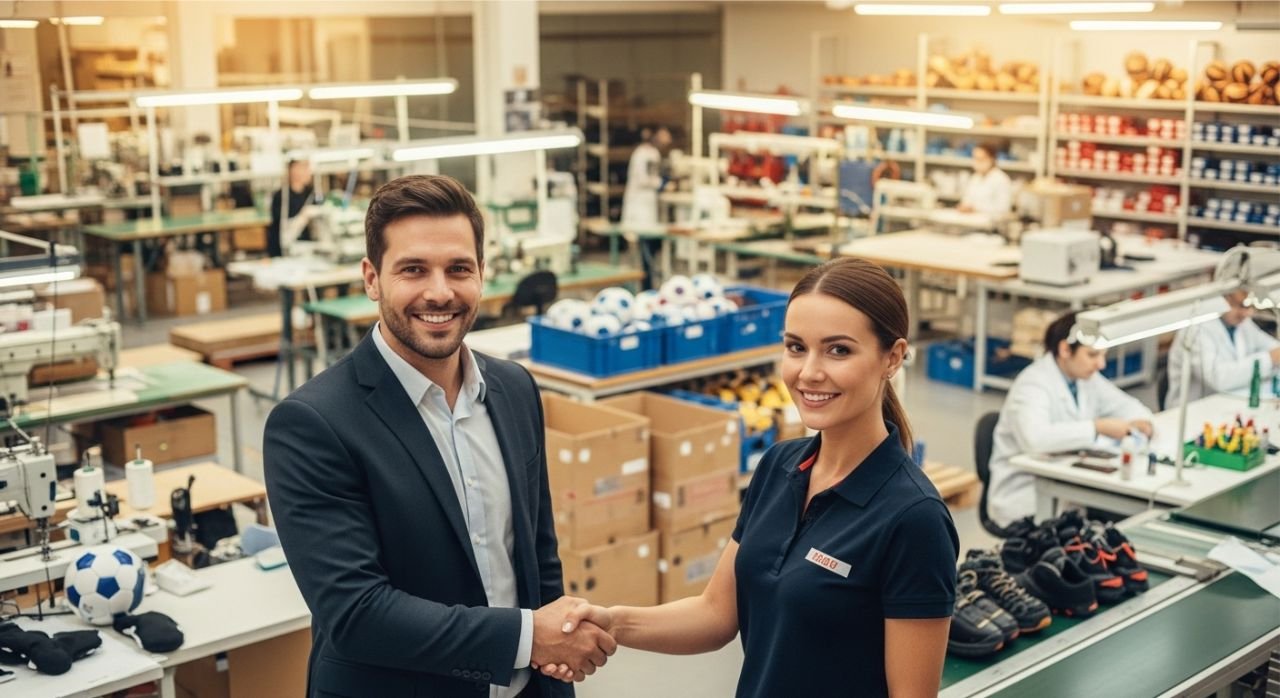
Selecting the right partner is key for B2B buyers. Following sports gear manufacturing quality standards ensures your products are consistent, durable, and trusted. But choosing a manufacturer is more than checking materials—it’s about finding a reliable and strategic partner.
First, focus on communication and transparency. A good supplier answers questions clearly and shares production updates. This builds trust and prevents surprises. When you know the status of your order, you can plan better and keep your business running smoothly.
Next, consider scalability and production capacity. Your supplier should handle small orders today and large orders tomorrow. If your business grows, you need a manufacturer who can grow with you. This is crucial for B2B buyers who want to maintain OEM sports gear manufacturing consistency across all batches.
Also, check reliability and delivery timelines. Late shipments or missed deadlines can hurt your brand reputation. A manufacturer that delivers on time ensures your products reach clients without delays. Strong B2B sports gear supplier quality includes both product performance and dependable delivery.
Finally, aim for long-term partnerships. A trusted manufacturer understands your brand and works proactively to improve quality, reduce risks, and innovate. Over time, this relationship saves money, improves efficiency, and strengthens your brand in the market.
In short, choosing the right sports gear manufacturer is an investment in your brand’s future. Focus on communication, scalability, reliability, and long-term collaboration. By partnering with a manufacturer who meets sports gear manufacturing quality standards, you ensure consistent quality, satisfied clients, and sustainable business growth.
Because in the end, strong partnerships create stronger products and lasting success.
✅ Build Strong Brands with the Right Quality Standards
In the end, sports gear manufacturing quality standards are not optional—they are non-negotiable. If you ignore them, your brand can suffer. But when you focus on sports gear quality control and proper quality assurance in sportswear manufacturing, you build something strong. You build trust. And trust helps your brand grow fast.
So, always choose wisely. Check the sports equipment manufacturing standards your supplier follows. Ask questions. Review samples. Look at their quality inspection process. This way, you avoid problems like poor stitching, weak materials, or delayed orders. As a result, you save money and protect your brand.
Remember, quality = brand growth + customer trust. When your products perform well, your customers stay happy. Then they come back again. And they tell others, too.
Now, it’s your turn to take the next step.
📣 Looking for a trusted partner?
At Rompvela International, we focus on high-quality sports gear production, strict QC checks, and reliable B2B service. We help you create products that stand out in performance and durability.
👉 Looking for a reliable sports gear manufacturing partner that meets international quality standards? Contact Rompvela International today and ensure your products stand out in performance and durability.
Reach out now for samples, quotes, or a quick consultation. Let’s build something great together.