
Starting a clothing brand or placing your first bulk order sounds exciting—but why does MOQ confuse so many new buyers? The answer is simple. Many beginners don’t understand why manufacturers won’t produce small quantities. As a result, they feel stuck. On one side, there is a limited budget. On the other hand, there are requirements for bulk clothing orders that seem too high. This creates a big challenge for B2B buyers trying to enter the apparel market.
So, what’s the solution? It starts with understanding the concept of the minimum order quantity for apparel. In simple terms, it means the smallest number of items a clothing manufacturer is willing to produce in a single order. Whether you are working with a custom sportswear manufacturer or exploring private label clothing MOQ, this number plays a huge role in your business decisions.
But don’t worry—this guide will make everything easy. First, you’ll learn why the apparel minimum order quantity exists and how it affects pricing and production costs. Then, we’ll explore smart ways to deal with garment manufacturing MOQ, including tips to negotiate better terms. Finally, you’ll discover simple strategies to manage your orders, reduce risks, and grow your brand step by step.
By the end, you won’t just understand MOQ—you’ll know how to use it to your advantage.
What is the Minimum Order Quantity in Apparel Manufacturing?
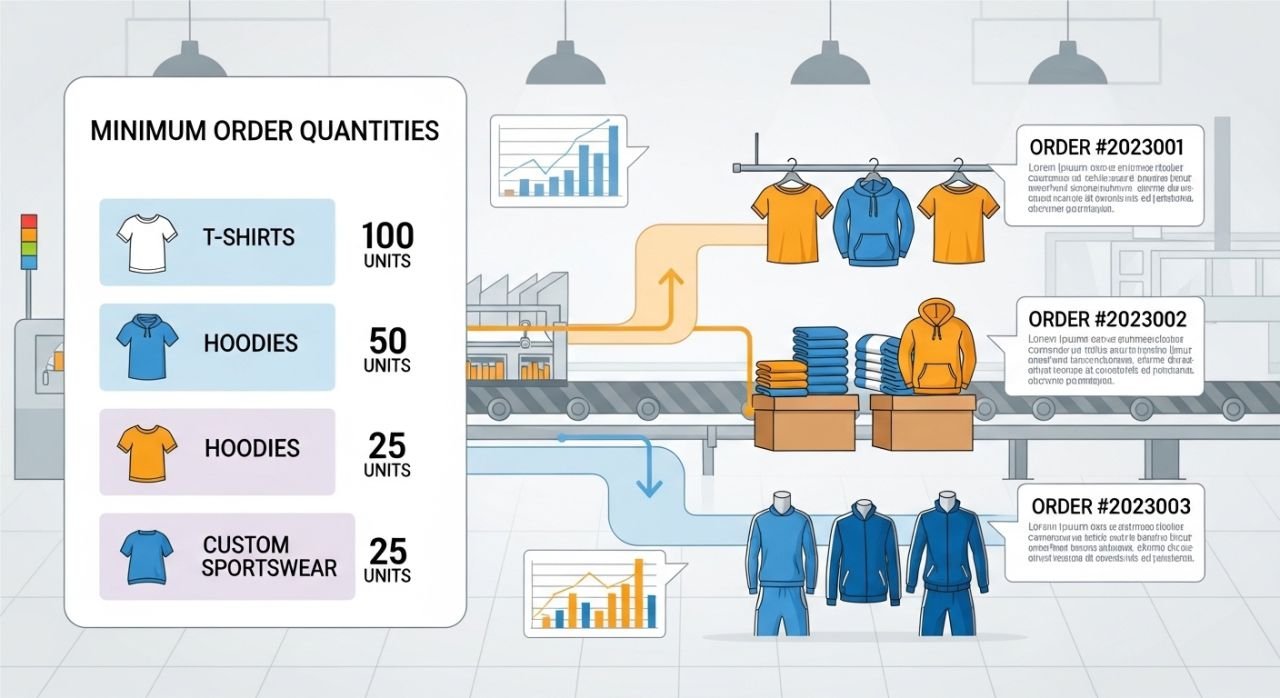
Let’s keep it simple. Minimum order quantity for apparel means the smallest number of clothes a factory will make in one order. In clothing manufacturing, the MOQ is a number that helps factories save time and money. So, if the MOQ is 100 pieces, you must order at least 100. You cannot order fewer. This is how the apparel minimum order quantity works.
Now, how does this apply to sportswear? When you order custom sportswear or private label clothing, things get a bit more detailed. Why? Because your items may need special fabric, printing, or embroidery. For example, adding a logo or custom design takes extra setup. So, the garment manufacturing MOQ is often higher for custom apparel than for ready-made items.
Let’s look at a simple example. Imagine you want to order custom jerseys for your team. You only need 20 pieces. But the manufacturer sets a minimum order quantity of 50. Why? Because they must prepare machines, cut fabric, and print your design. If they make only 20, the cost becomes too high. But with 50, the process becomes easier and cheaper per piece.
So, what should you do? You can order more and save costs. Or you can look for a supplier offering low MOQ clothing manufacturing with slightly higher prices.
In short, minimum order quantity apparel is not a problem—it is a smart system. It helps balance cost, quality, and production for both buyers and manufacturers.
Why Do Apparel Manufacturers Set Minimum Order Quantities?
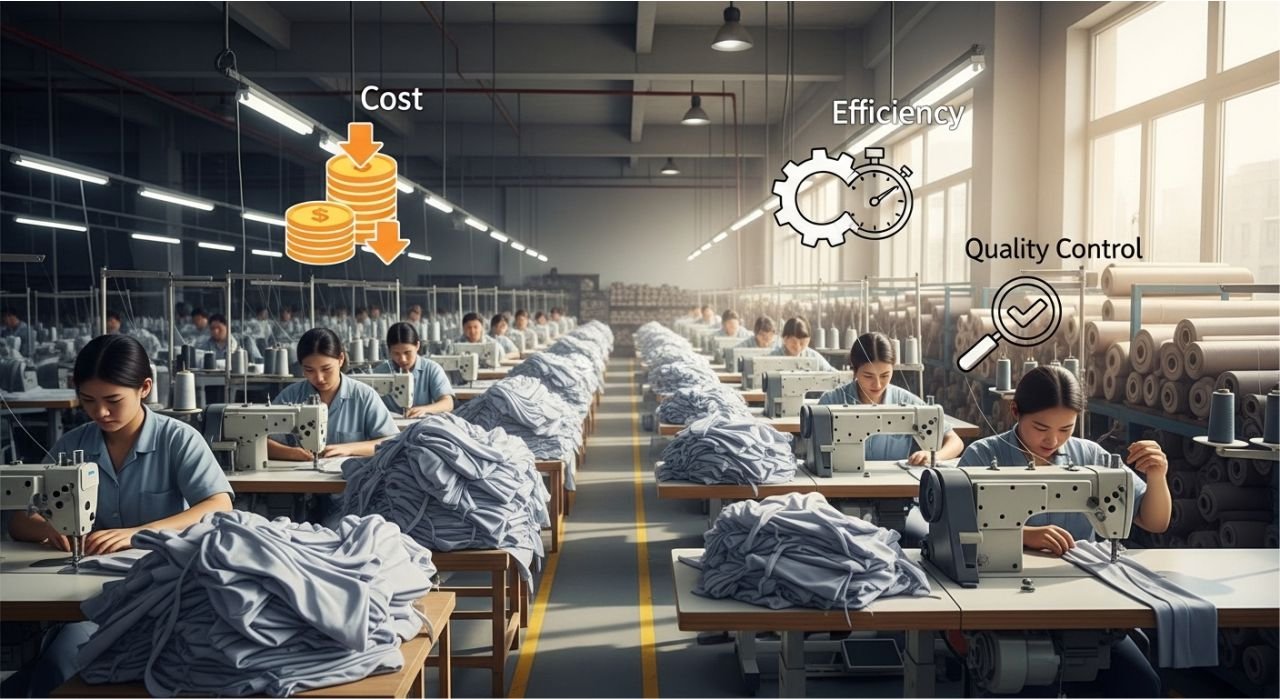
You may ask, why do factories not accept small orders? The answer is simple. Minimum order quantity apparel helps manufacturers work faster, smarter, and at a lower cost.
First, let’s talk about production efficiency. Factories use machines and workers to make clothes. They need time to set everything up. If the order is too small, they still spend the same time. So, the cost becomes high. That’s why clothing manufacturing MOQ helps control costs and improve speed.
Next comes fabric. Manufacturers buy fabric in bulk. This is called bulk purchasing. When they buy more, they get better prices. But if you order a small quantity, they cannot use this benefit. So, apparel’s minimum order quantity ensures they can source materials at the right cost.
Now think about labor and machines. Workers must cut fabric, stitch pieces, and prepare designs. Machines also need to be set up for printing or embroidery. These steps cost money. So, the garment manufacturing MOQ helps cover these setup costs.
Finally, there is quality. When factories produce in bulk, they can keep the same design, fabric, and stitching. This creates quality consistency in bulk clothing production. Small orders may lead to variations, which is not good for your brand.
So, the minimum order quantity for apparel is not just a rule. It is a smart way to balance cost, efficiency, and quality. When you understand this, you can work better with manufacturers and make smarter buying decisions.
How Minimum Order Quantity Affects Pricing in Apparel Production
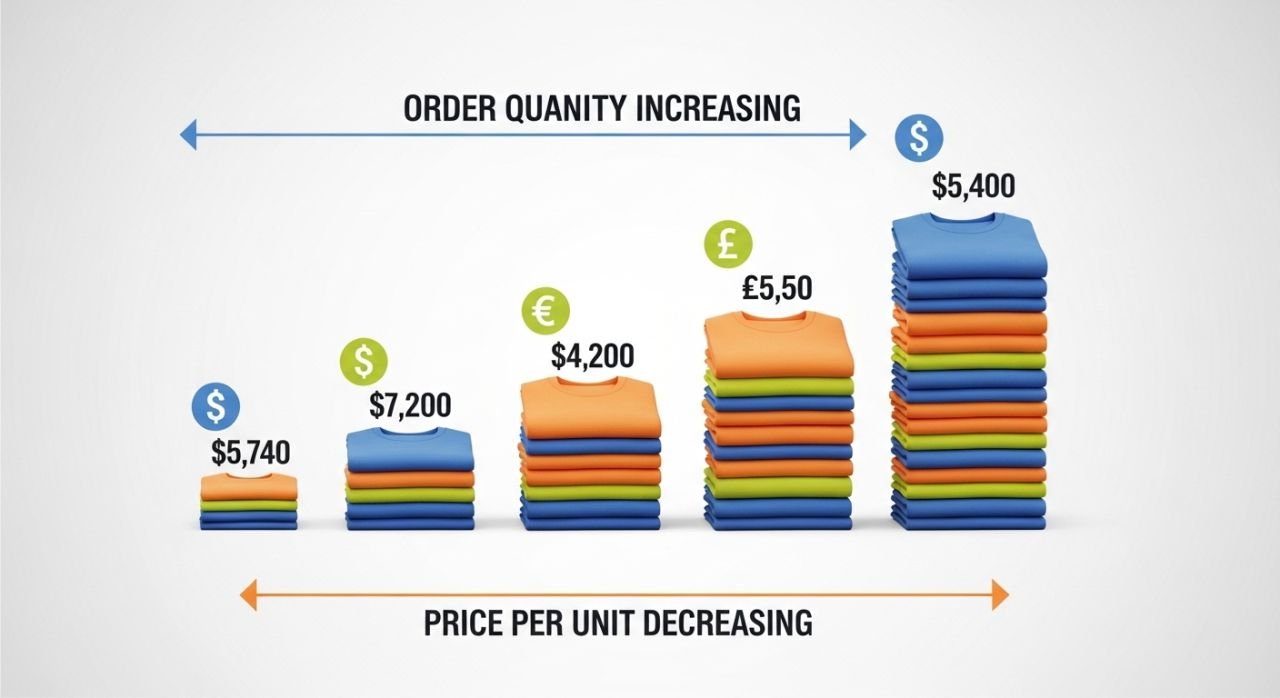
Let’s understand how the minimum order quantity of apparel changes the price you pay. It’s very simple. When you order more pieces, the cost per item becomes lower. But when you order less, the price per piece goes up.
First, think about this. Factories spend money on setup, fabric, and labor. These costs stay almost the same, whether you make 20 items or 200. So, in clothing manufacturing, the MOQ is bigger orders that spread the cost across many pieces. This reduces the per-unit cost. That’s why the apparel minimum order quantity is important for pricing.
Now, let’s talk about bulk pricing advantages. When you place a large order, you get better deals. Fabric is cheaper in bulk. Production runs smoothly. As a result, B2B buyers save more money and earn better profit margins.
But what about small orders? In small batch clothing manufacturing, the cost per piece is higher. Why? Because the factory still needs to prepare machines, workers, and materials. So, fewer items mean higher prices.
Also, there are hidden costs in low MOQ orders. You may pay extra for:
- Custom setup
- Fabric sourcing in small quantities
- Special handling charges
These costs add up quickly.
So, minimum order quantity apparel is not just about quantity—it directly affects your pricing strategy. If you understand this, you can plan better, choose the right garment manufacturing MOQ, and grow your business with smart decisions.
Typical MOQ Requirements in the Apparel Industry
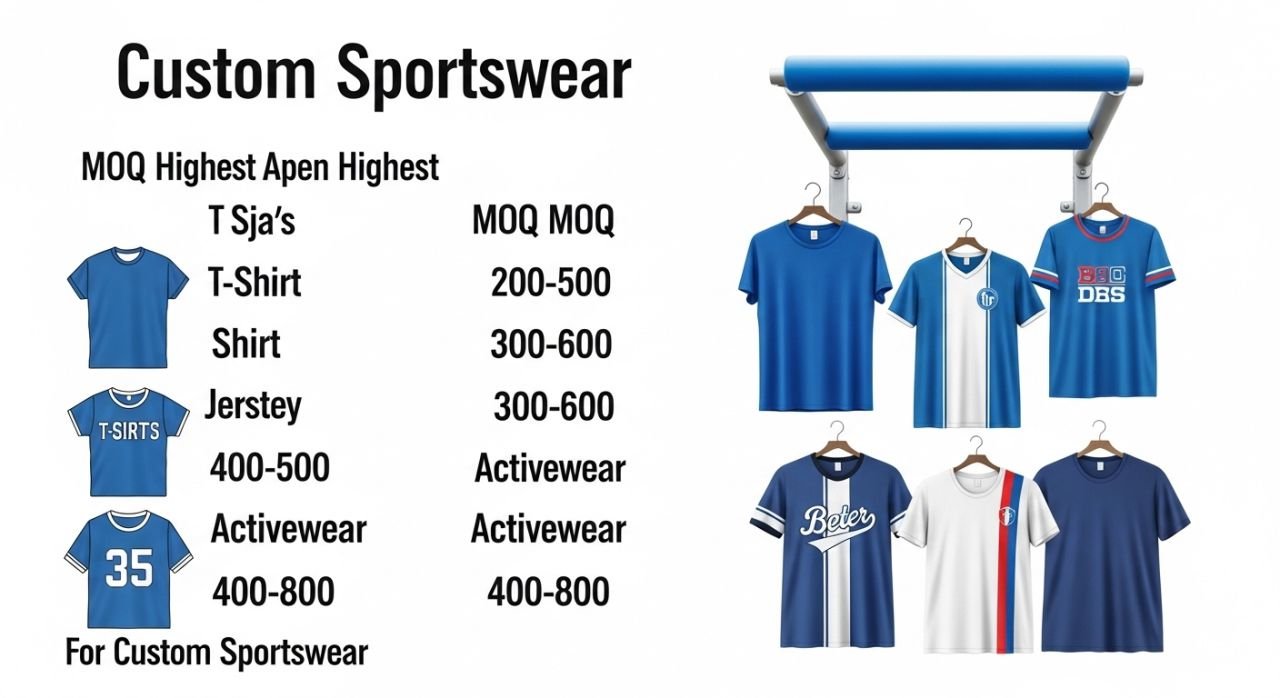
Understanding the minimum order quantity for apparel helps you plan smarter. Different manufacturers have different requirements. Let’s break it down so it’s easy to follow.
First, custom sportswear manufacturers often set MOQs between 50 and 200 pieces per design. This is because each item may need special fabrics, logos, or printing. The setup costs are higher, so the factory asks for more pieces to make production efficient.
Next, private label clothing production usually requires a slightly higher MOQ, often 100 to 500 pieces. These orders include unique branding, embroidery, or custom packaging. Since the factory invests more in materials and labor, larger minimum orders help keep costs reasonable.
For wholesale apparel suppliers, the MOQ can vary widely, usually from 200 to 1000 pieces, depending on the style and material. These suppliers focus on bulk ready-made items, so higher MOQs make production and shipping simpler.
Now, it’s important to know the differences between large factories and small manufacturers. Large factories often have higher MOQs because they handle bigger orders efficiently. Small manufacturers may offer low MOQ clothing manufacturing, sometimes as low as 20–50 pieces, but the cost per unit may be slightly higher.
Finally, MOQ also varies by product type. For example:
- T-shirts usually have lower MOQ requirements.
- Team uniforms or jerseys may require more because of custom printing.
- Activewear like leggings or jackets often needs larger MOQs due to specialized fabrics and production complexity.
In short, knowing the typical apparel minimum order quantity helps you choose the right manufacturer. It ensures you balance cost, quality, and order size while growing your brand confidently.
Low MOQ Clothing Manufacturers: Are They Worth It?
Many new brands ask, “Are low MOQ clothing manufacturers worth it?” The answer depends on your business goals. Minimum order quantity for apparel can seem high for startups. That’s why some factories offer low MOQ options. These are perfect for small brands or those testing the market.
First, let’s talk about the benefits. Low MOQ suppliers let you order small quantities, reduce upfront costs, and test new designs without large investments. This is ideal for startups and small brands that want to grow slowly. You can also try different styles, fabrics, or colors without wasting money.
However, there are trade-offs. Low MOQ usually comes with higher per-unit pricing. You may also face limited customization options or longer production times. Margins can be smaller compared to bulk orders. So, it’s important to plan carefully before choosing low MOQ suppliers.
When should you choose low MOQ versus bulk production? Use low MOQ clothing manufacturing when you are launching a new line, testing the market, or working with limited capital. Choose bulk production when your brand is established, demand is predictable, and you want lower per-unit costs and better garment manufacturing efficiency.
Finally, let’s clear some misconceptions. Many buyers think that low MOQ suppliers deliver poor quality. This isn’t true. Some small manufacturers are highly skilled and produce premium custom sportswear or private label clothing. The key is to check reviews, request samples, and communicate clearly with the factory.
In short, low MOQ suppliers can be a smart choice for startups and small brands. They offer flexibility and reduce risk. But you must weigh pricing, customization, and margins carefully. When used strategically, low MOQ can help your brand grow smartly and efficiently.
How to Negotiate Minimum Order Quantity with Apparel Manufacturers
Negotiating a minimum order quantity for apparel can save your brand money and make production easier. Many B2B buyers feel stuck with high MOQs, but with the right approach, you can reduce them without compromising quality.
Here are some practical tips:
- Start with limited customization – The more unique your design, the higher the MOQ. Using simpler logos, basic prints, or standard sizes can convince manufacturers to lower their minimum order.
- Use existing fabrics or stock designs – Factories prefer ready-to-use materials. By choosing their stock fabrics or standard designs, you reduce setup costs, making it easier to negotiate a lower MOQ.
- Build long-term relationships – Factories value loyal buyers. If you plan to order regularly, let them know. Manufacturers are often flexible for reliable clients, offering lower garment manufacturing MOQ over time.
Before placing an order, ask key questions:
- Can you produce smaller quantities for the first batch?
- Are there extra fees for low MOQ orders?
- Can existing materials or designs be used?
- What is the lead time for different order sizes?
Additionally, use negotiation strategies:
- Combine multiple styles or sizes in one order to meet the MOQ
- Offer a small upfront payment or commitment for future bulk orders
- Compare quotes from multiple suppliers to leverage better terms
Remember, the minimum order quantity for apparel is negotiable. With clear communication, smart planning, and understanding factory needs, you can reduce MOQ while keeping quality high. This strategy helps you start small, test the market, and grow your brand efficiently.
By following these tips, B2B buyers can save money, reduce risk, and build strong partnerships with manufacturers—turning MOQ from a challenge into an opportunity.
Smart MOQ Strategies for New Apparel Brands and Buyers
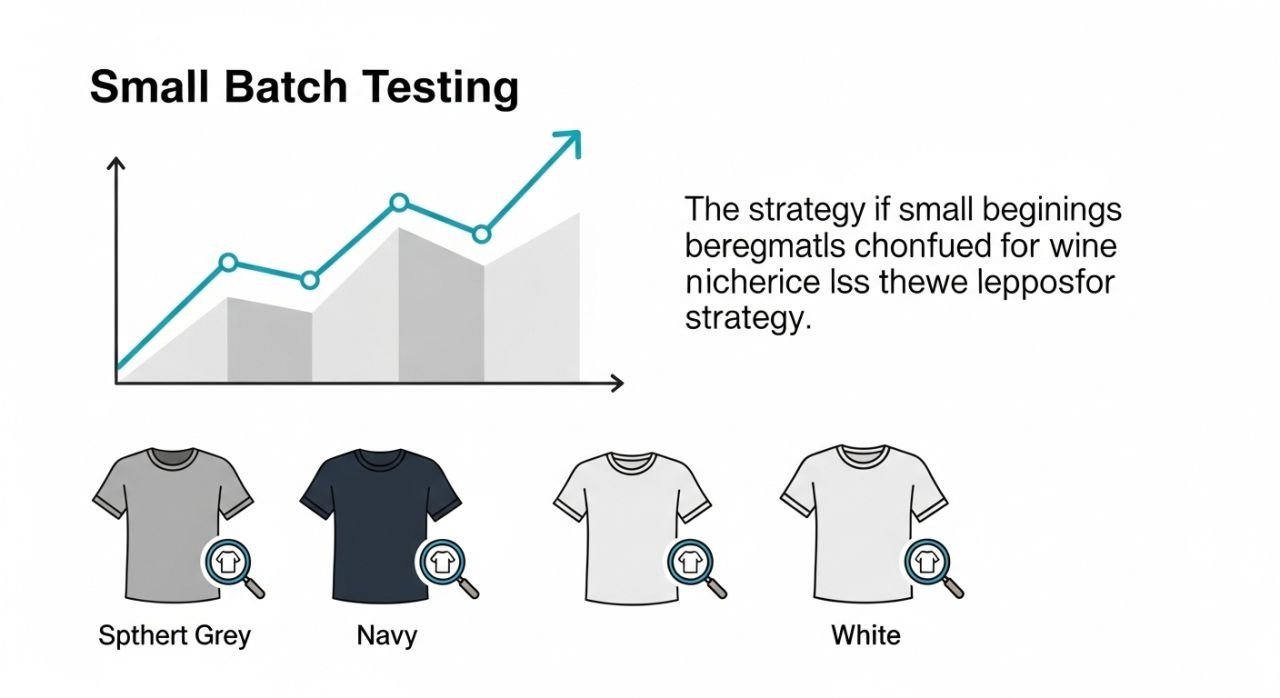
Starting a clothing brand or buying in bulk can be tricky. That’s why understanding the minimum order quantity for apparel is important. With smart strategies, you can save money, reduce risk, and grow your business step by step.
First, plan your inventory based on MOQ. Know the minimum number of pieces required by the manufacturer. This helps you avoid overstock or shortages. For example, if the MOQ is 100 t-shirts, decide how many of each size or color you actually need.
Next, test the market with small batch production. Instead of committing to large orders, start with lower quantities to see what sells. This is especially helpful for custom sportswear or new designs. You can adjust future orders based on real demand.
Another smart approach is combining sizes, colors, or designs in one order. For instance, if the MOQ is 100 pieces, you could order 40 small, 30 medium, and 30 large. Or mix colors to match customer preferences. This strategy lets you meet the apparel minimum order quantity without overspending on a single variation.
Finally, scale gradually from low MOQ to bulk production. Start small, test what works, and increase your order size as your sales grow. This reduces risk and keeps production efficient. Over time, you can negotiate better pricing and more flexibility with manufacturers.
In short, minimum order quantity apparel is a tool, not a hurdle. By planning inventory, testing with small batches, combining variations, and scaling wisely, new apparel brands can manage costs, reduce waste, and build a strong foundation for growth.
These strategies help B2B buyers work smart, meet manufacturer requirements, and grow their brand with confidence.
MOQ vs Bulk Orders: Finding the Right Balance for Your Business
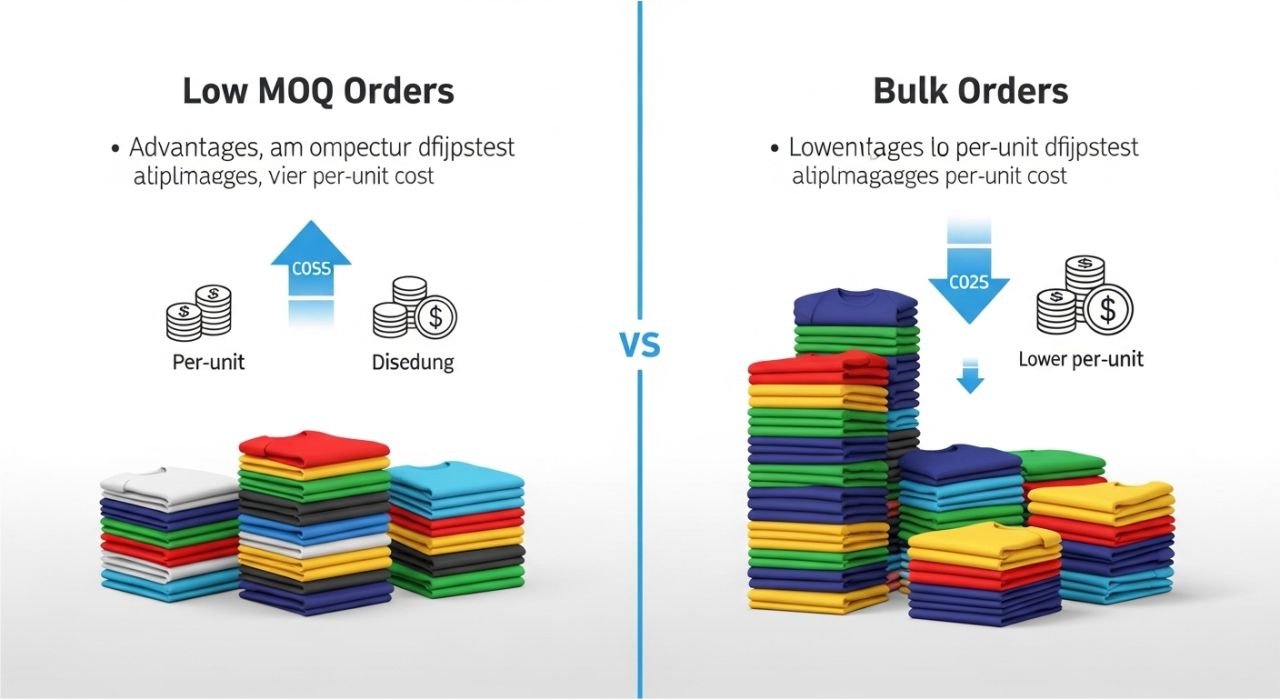
Understanding the difference between minimum order quantity apparel and bulk orders is key to smart B2B buying. Both have benefits, but the right choice depends on your business goals and resources.
When do bulk orders make more sense? If you have a stable brand, predictable sales, and a large budget, ordering in bulk reduces the per-unit cost. Factories offer better pricing, and you get consistent quality across all pieces. Bulk production is ideal for established brands that want to maximize profit while keeping inventory ready for customers.
However, MOQ orders help manage risk. Startups or new brands may not know what designs or sizes will sell best. Placing smaller orders allows you to test the market without overcommitting. This reduces waste and protects your capital while still meeting the apparel minimum order quantity set by the manufacturer.
The key is aligning MOQ decisions with your business goals. Ask yourself: Am I testing new designs, or am I scaling an existing line? Do I want lower cost per unit, or do I need flexibility in inventory? Your strategy should balance cost, risk, and growth potential.
Here’s a simple scenario:
- Startup: Orders 50–100 pieces of a new custom sportswear design to see what sells. Uses low MOQ suppliers and adjusts future orders based on demand.
- Established brand: Orders 500–1000 pieces of the best-selling t-shirt to take advantage of bulk pricing, ensuring consistent quality and maximizing profit.
In short, minimum order quantity apparel and bulk orders are tools. Start small if you’re testing the market. Scale up to bulk when your brand grows. Finding the right balance helps you manage risk, control costs, and grow your business confidently.
Choosing the Right Apparel Manufacturer Based on MOQ
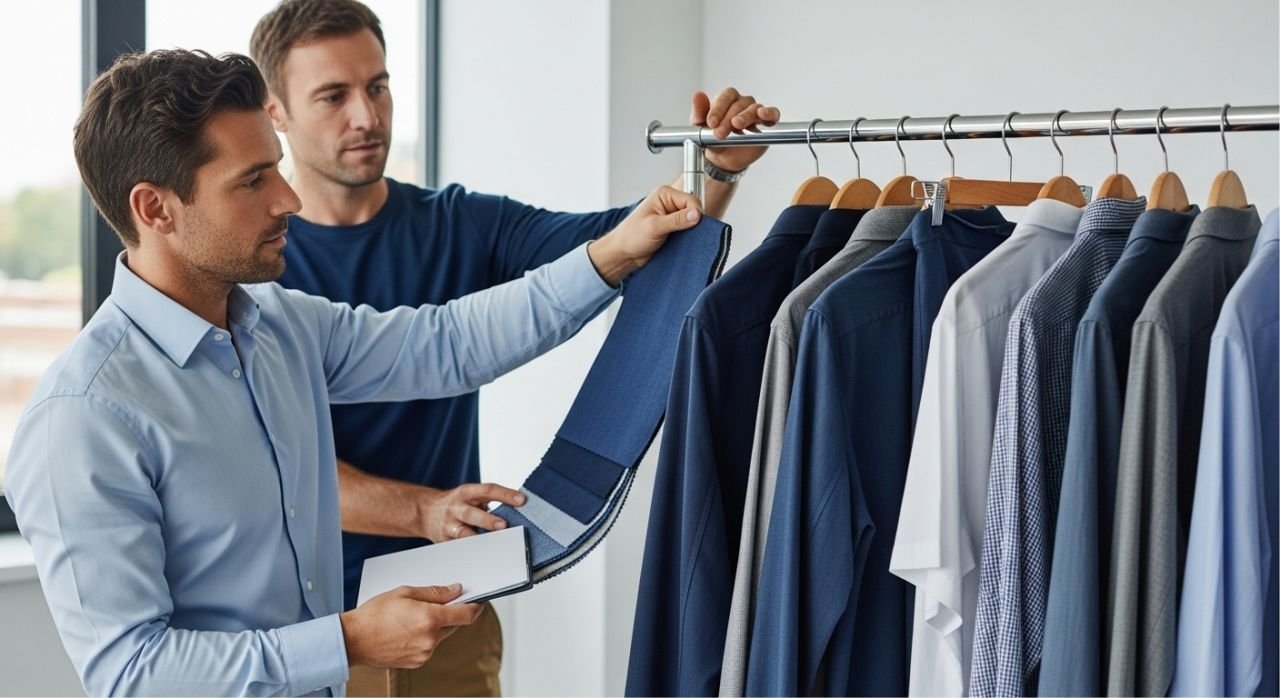
When selecting a factory, the minimum order quantity of apparel is important—but it shouldn’t be the only factor. Choosing the right apparel manufacturer requires looking at other key elements that impact your business success.
First, consider quality and reliability. A factory may offer low MOQ, but if the clothes are inconsistent or poorly made, it will hurt your brand. Always request samples and check their production standards.
Next, think about customization options. Many B2B buyers need custom logos, fabrics, or designs. The right manufacturer should offer flexible garment manufacturing options while still meeting MOQ requirements.
Also, evaluate communication and support. Clear and timely communication ensures your orders are accurate and deadlines are met. A responsive factory saves time and prevents costly mistakes.
Remember, MOQ is just one piece of the puzzle. Low minimums may seem attractive, but they don’t guarantee quality, customization, or good service. Smart buyers consider the full picture when choosing a supplier.
Finally, prioritize long-term B2B partnerships. Reliable manufacturers become trusted partners. Over time, they may offer better MOQ flexibility, improved pricing, and faster production. Building a strong relationship benefits your brand as it grows.
In short, the minimum order quantity for apparel is important, but it’s not everything. Focus on quality, customization, communication, and long-term collaboration. By combining these factors, B2B buyers can choose the right manufacturer, reduce risk, and grow their brand with confidence.
Selecting the right supplier ensures you meet MOQ requirements while maintaining high standards, supporting brand growth, and creating a smooth production process from start to scale.
Final Thoughts: Turn MOQ Into Your Business Advantage
Now you understand the minimum order quantity for apparel. It is not a barrier. Instead, it is a tool that helps control cost, quality, and production. We learned why the apparel minimum order quantity exists. We also saw how it affects pricing, planning, and profits. So, don’t fear big numbers. Instead, think smart. Plan your orders. Start small if needed. Then grow step by step.
Also, remember this. Smart buyers don’t avoid MOQ—they use it wisely. You can talk to your supplier. You can negotiate better terms. You can choose the right garment manufacturing MOQ for your brand. This way, you reduce risk and build confidence. As a result, your business grows stronger with every order.
Now it’s your turn to take action. If you want flexible MOQ options, expert help, and smooth production, we are here for you. At Rompvela International, we offer custom sportswear manufacturing with care and precision. Plus, our team provides reliable B2B production services to support your journey from start to scale.
👉 Looking for a trusted apparel manufacturer with flexible MOQ and premium quality? Contact Rompvela International today and start building your brand with confidence.